
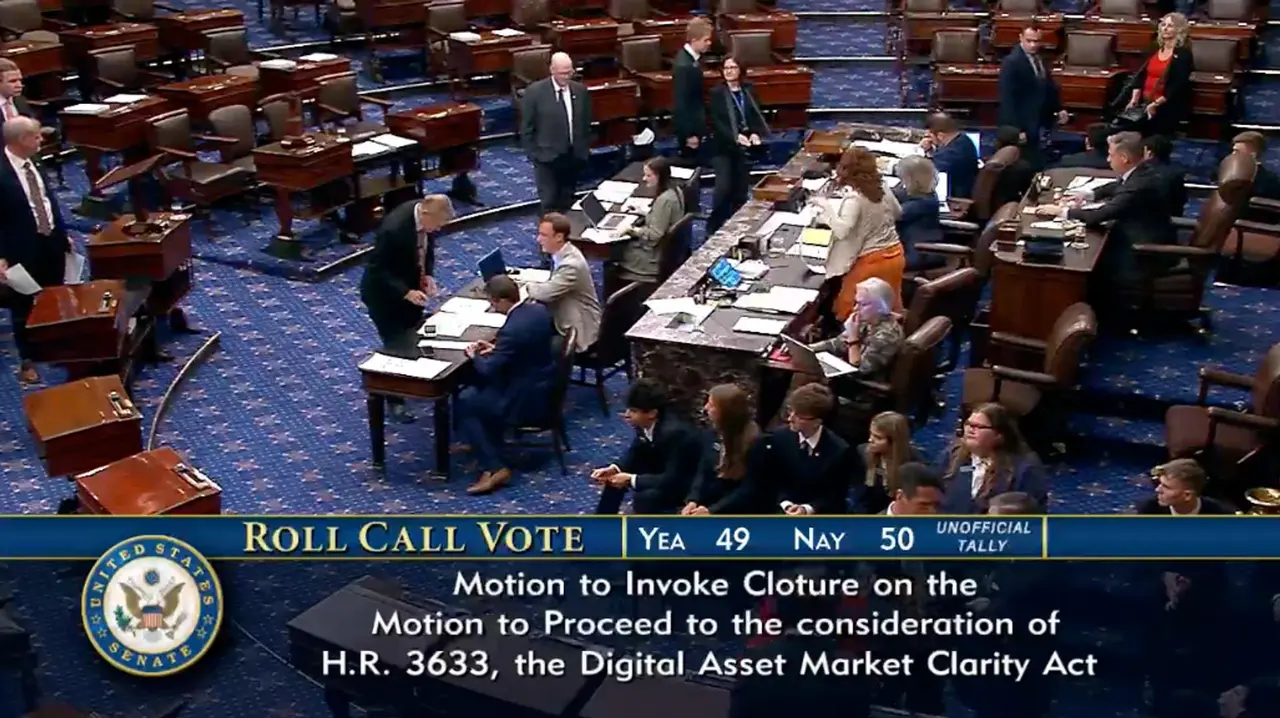
The crypto industry's long-awaited market structure bill, known as the Clarity Act, has stalled amid a tangle of last-minute disputes, dashing hopes that Congress would deliver a landmark regulatory framework for digital assets this session.
A Bill That Lost Its Momentum
The Clarity Act was meant to be the crowning legislative achievement for an industry that has spent years lobbying for clear rules of the road. Instead, behind-the-scenes wrangling in the final stretch left the measure in a weakened position, far from the decisive victory its backers had anticipated.
Rather than a single point of failure, the derailment stemmed from a collection of competing interests and disagreements that surfaced as lawmakers tried to finalize the text. Negotiators found themselves at odds over key provisions, and the compromises needed to move the bill forward proved elusive.
The industry's greatest legislative hope stalled not because of one obstacle, but because too many hands were pulling in different directions.
Many Hands, Many Agendas
Multiple parties played a role in the outcome, each bringing their own priorities to the table. The competing demands complicated efforts to build the broad consensus required for such sweeping legislation to advance through Congress.
For an industry that had pinned enormous expectations on the measure, the result represents a significant setback. Market structure legislation would have clarified how digital assets are classified and which regulators oversee them — questions that continue to create uncertainty for companies operating in the United States.
The episode underscores how difficult it remains to translate industry ambitions into enacted law, even at a moment when crypto has gained political influence and attention in Washington.
- The bill aimed to establish a clear regulatory framework for digital assets.
- Last-minute disputes among stakeholders undermined its progress.
- The outcome marks a disappointment for an industry seeking legal certainty.
With the legislation stalled, the crypto sector faces continued regulatory ambiguity and the prospect of revisiting its legislative strategy in future sessions.