
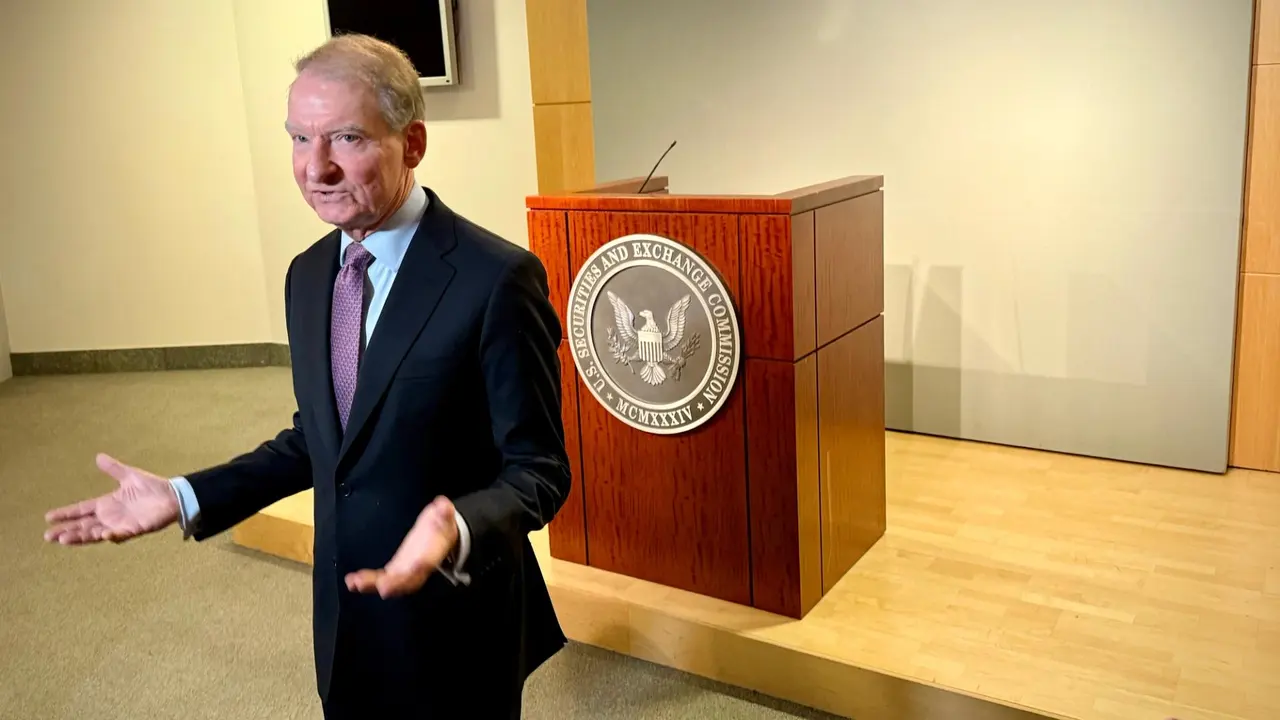
Securities and Exchange Commission Chair Paul Atkins has thrown his support behind the Clarity Act, the sweeping crypto market structure bill working its way through Congress, while making clear that the agency will move forward with its own rulemaking regardless of whether the legislation becomes law.
Atkins Backs Legislative Effort
Atkins signaled strong approval for the Clarity Act, which aims to establish a clearer framework for how digital assets are regulated in the United States. The bill has been closely watched by industry participants who have long complained about regulatory ambiguity and the lack of defined rules governing tokens, exchanges and related businesses.
Even so, the SEC chair emphasized that the commission is not waiting on Capitol Hill to act. He indicated the agency intends to press ahead with its own regulatory initiatives, positioning the SEC to shape crypto policy through administrative channels rather than relying solely on new legislation.
"The agency will keep pushing crypto rules with or without the Clarity Act," Atkins signaled.
The SEC's Regulatory Priorities
Atkins outlined several areas that will anchor the SEC's approach to digital assets. Chief among them is crypto issuance, or the rules that determine how tokens can be created and offered to investors — a persistent point of tension between the industry and regulators.
Modernizing the transfer agent framework also featured prominently in his remarks. Transfer agents, which handle recordkeeping for securities ownership, could play an expanded role as more financial instruments migrate onto blockchain-based systems.
Custody rounded out the list of priorities. Clear standards for how digital assets are safely held and secured have been a recurring concern, particularly for institutional players seeking to enter the market with confidence.
- Crypto issuance rules
- Transfer agent modernization
- Digital asset custody standards
The dual-track strategy suggests the SEC under Atkins is willing to advance crypto policy on its own terms, using existing authority to fill gaps while lawmakers debate a broader statutory overhaul.