
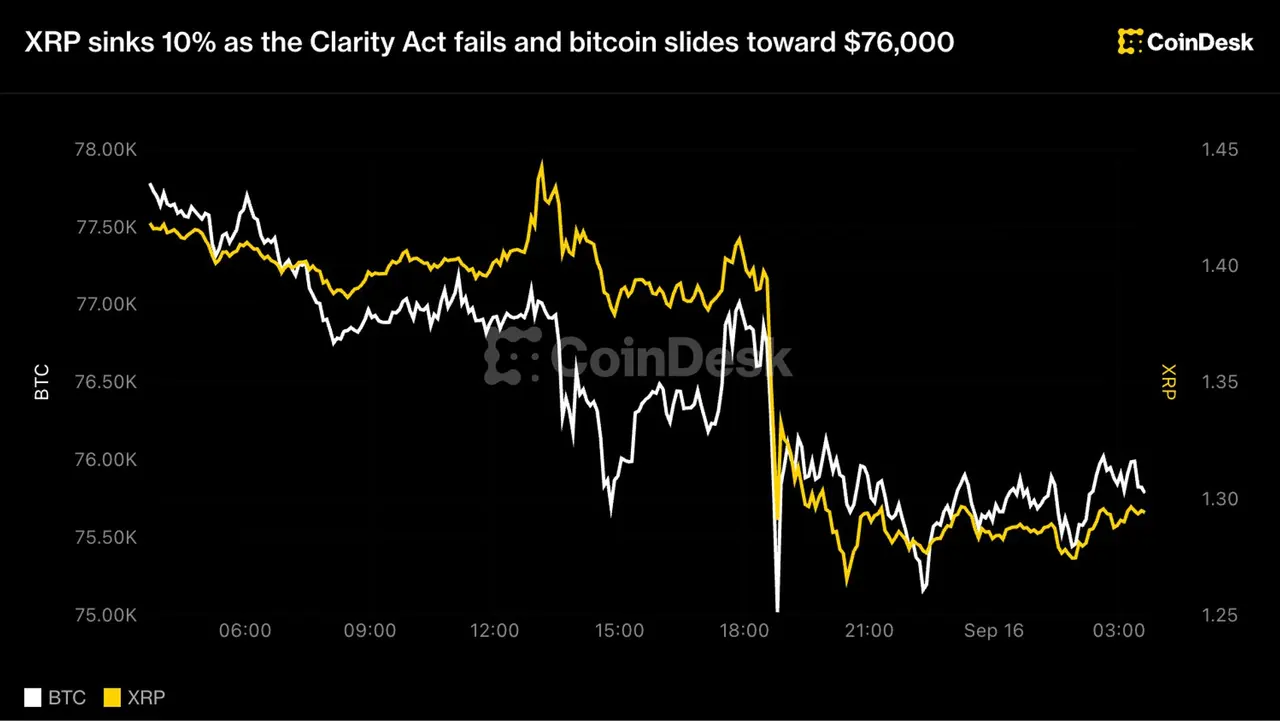
XRP tumbled roughly 10% on Tuesday after a closely watched crypto market structure bill stalled in the U.S. Senate, dragging the broader digital asset market lower and pushing bitcoin toward the $76,000 level.
Legislative Setback Rattles Markets
The Clarity Act, a bill designed to establish clearer rules for how cryptocurrencies are regulated in the United States, failed to advance after a procedural vote in the Senate came up short. Lawmakers voted 49-50 on the measure, leaving supporters 11 votes shy of the threshold needed to move the legislation forward.
The defeat marked a significant blow to an industry that had been counting on the bill to resolve long-standing questions about which regulatory agency oversees various tokens and how digital assets should be classified. The uncertainty that the legislation sought to address remains firmly in place following the vote.
When Washington stumbles, the crypto market feels it almost immediately.
Broad Sell-Off Across the Sector
The reaction was swift and widespread, with every major token registering losses in the wake of the vote. XRP was among the hardest hit, sliding around 10% as traders reassessed the near-term prospects for regulatory clarity that many had priced in.
Bitcoin, the largest cryptocurrency by market value, was not spared from the downturn. The flagship asset slid toward the $76,000 mark, reflecting the risk-off mood that swept through the market after the bill's failure.
The synchronized decline underscored how sensitive digital asset prices have become to developments in Washington, where regulatory decisions can move markets in a matter of hours.
- XRP dropped roughly 10% following the vote
- Bitcoin slipped toward $76,000
- The Senate rejected the measure 49-50, falling 11 votes short
What Comes Next
With the Clarity Act stalled, the path forward for comprehensive crypto legislation appears uncertain. Industry advocates who had hoped for a defined regulatory framework will now face a longer wait, and the ambiguity surrounding token classification and oversight persists.
For traders, the failed vote serves as a reminder that policy risk remains a central factor in the crypto market. How lawmakers choose to proceed in the coming weeks could determine whether the recent sell-off deepens or stabilizes.