
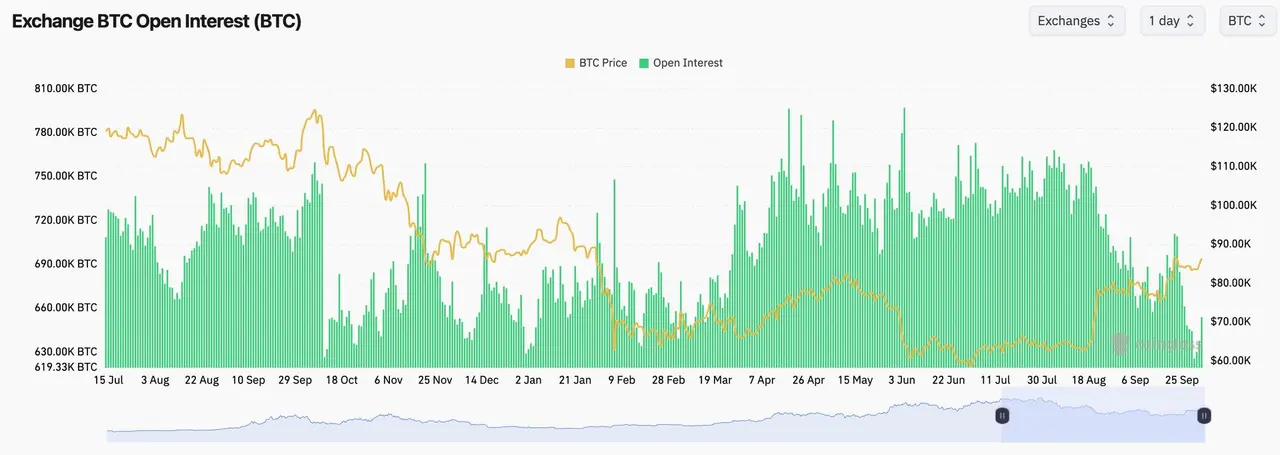
Bitcoin pushed past $86,500 as traders piled back into leveraged long positions, with climbing perpetual funding rates and open interest pointing to a renewed appetite for bullish exposure across derivatives markets.
What The Funding Rates Are Telling Us
Perpetual futures funding rates have turned decisively positive, a signal that traders holding long positions are paying a premium to keep their bets open. In perpetual swap markets, funding payments flow between longs and shorts to keep the contract price tethered to spot. When the rate rises, it typically means buyers are willing to pay to maintain upside exposure — a classic sign of bullish sentiment building in the system.
The move higher in funding comes alongside a notable increase in open interest, the total value of outstanding derivatives contracts. Rising open interest paired with climbing prices generally suggests fresh capital is entering the market rather than existing positions simply being unwound, reinforcing the view that demand for leveraged longs is genuine.
When traders pay up just to stay long, the market is wearing its optimism on its sleeve.
The Risks Hiding In Leverage
While the backdrop looks constructive, elevated leverage cuts both ways. Heavily crowded long positioning can leave the market vulnerable to sharp liquidation cascades if prices stumble, as over-leveraged traders are forced to close positions, accelerating downside moves. The same enthusiasm that drives funding rates higher can amplify volatility when sentiment flips.
Analysts watching the derivatives landscape point to several indicators worth tracking as bitcoin trades above the $86,500 level:
- Funding rates, which reflect the cost of maintaining long exposure
- Open interest, which gauges how much capital is committed to the market
- Liquidation levels, which highlight where forced selling could cluster
For now, the data paints a picture of returning confidence among bitcoin bulls. But traders and observers alike will be watching to see whether the rally is backed by durable spot demand or primarily fueled by borrowed money — a distinction that often determines how sustainable a move higher turns out to be.