
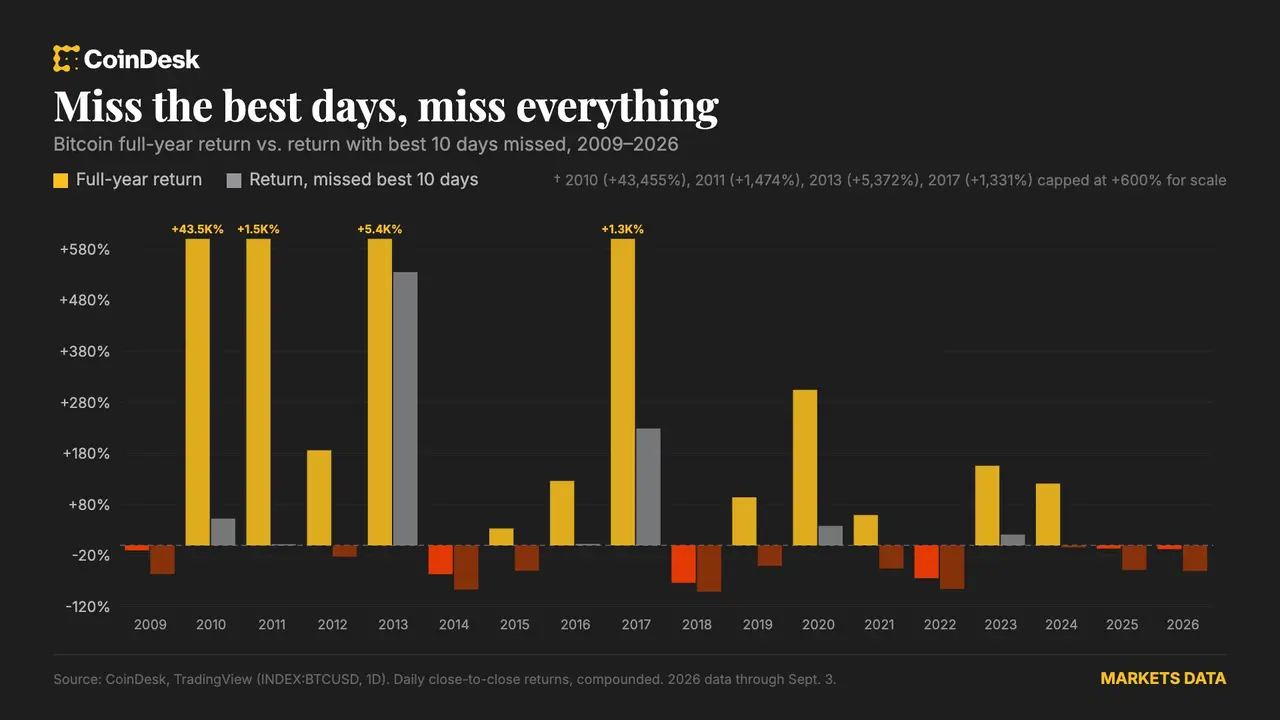
Trying to nail the perfect entry and exit points in bitcoin's volatile market may be one of crypto's most seductive pursuits—but historical data suggests it's a losing game for nearly everyone who attempts it. A fresh analysis of bitcoin price behavior from 2010 through 2026 reveals that the overwhelming share of the cryptocurrency's yearly gains materializes over just a handful of trading days, making a simple buy-and-hold strategy far more effective than active timing.
The Math Behind Missing the Best Days
The core problem with market timing is that bitcoin's outsized returns are concentrated into an extremely narrow window of time. Across more than a decade of data, the bulk of annual performance came from a tiny sliver of the calendar year. Investors who happened to be sitting on the sidelines during those explosive sessions saw their overall returns collapse.
Because these standout days are impossible to predict in advance, an investor attempting to hop in and out of the market risks being absent for precisely the moments that generate the most wealth. Even missing a small number of the strongest days can transform a robust return into a mediocre one.
Miss just a handful of bitcoin's best days, and years of potential gains can evaporate.
Why Buy-and-Hold Wins
The takeaway from crypto experts is straightforward: staying continuously invested captures those rare, powerful rallies without requiring an investor to forecast the unforecastable. Rather than guessing when momentum will strike, holders remain exposed to the market at all times.
Timing also introduces behavioral and practical hazards. Emotional decision-making, transaction fees, and the temptation to sell during downturns all erode returns over time. These frictions compound, quietly chipping away at whatever edge a trader hopes to gain.
Key reasons the data favors patience include:
- Bitcoin's biggest gains cluster into very few trading days each year
- Predicting those days in advance has proven nearly impossible
- Frequent trading raises costs and invites emotional errors
- Long-term holding keeps investors exposed to sudden rallies
For most participants, the historical record points to a disciplined, hands-off approach as the more reliable path to capturing bitcoin's long-term upside, even as the thrill of trying to outsmart the market remains ever-present.