
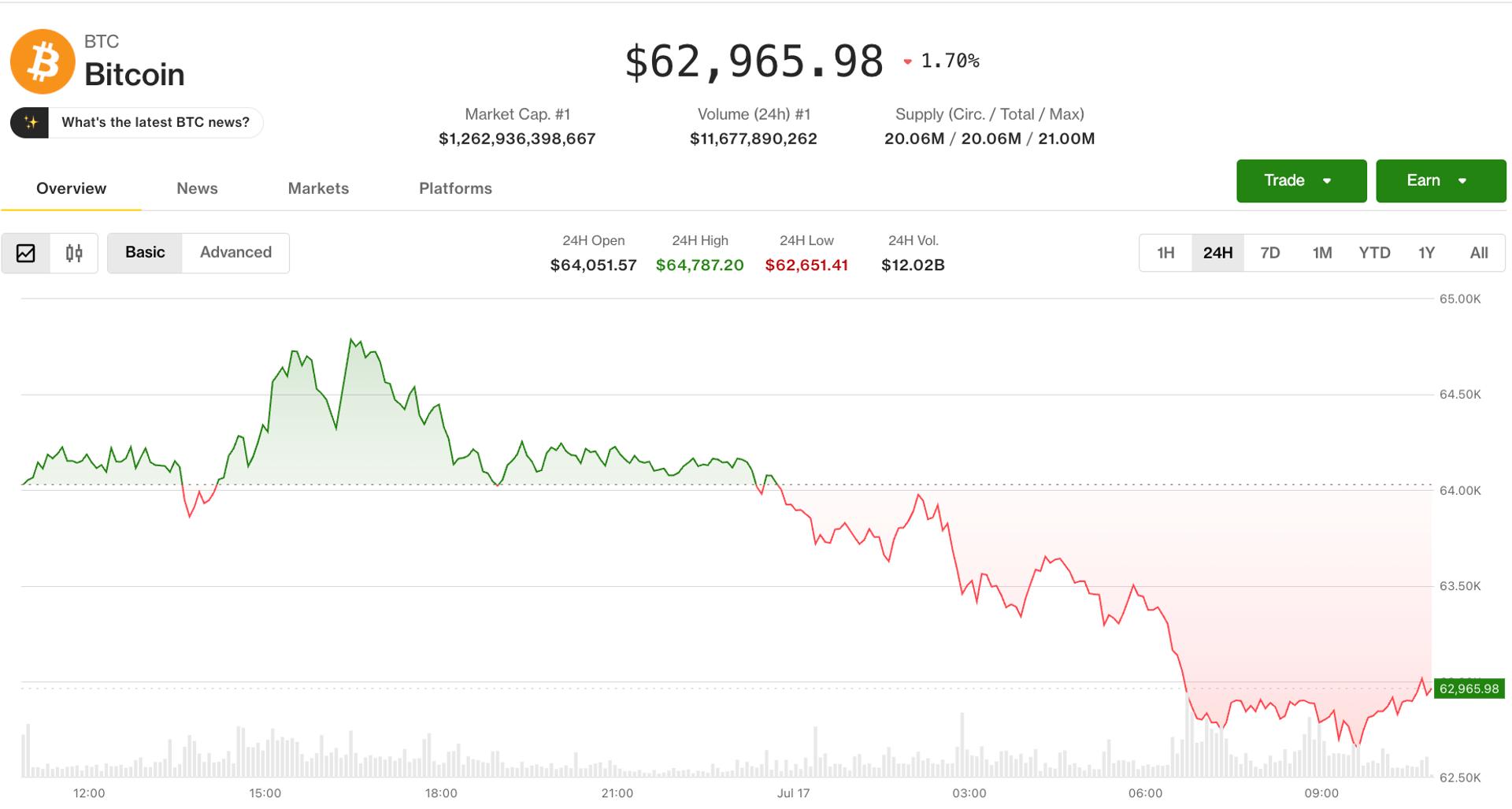
Bitcoin slid beneath the $63,000 mark on Friday as a broad wave of risk aversion swept across financial markets, with jitters over overstretched artificial intelligence stocks spilling into digital assets and geopolitical tensions adding to the pressure.
Selloff Spreads From Wall Street to Crypto
The latest downturn began in equity markets, where investors grew increasingly wary of lofty valuations among AI-linked technology companies. That fatigue rippled quickly into the crypto sector, which has often traded in tandem with high-growth tech stocks during periods of market stress.
Bitcoin's drop below $63,000 marked a notable retreat, dragging much of the broader digital asset market lower alongside it. The correlation between crypto and equities has reinforced the idea that traders are treating bitcoin less as a safe haven and more as a speculative, risk-sensitive asset during turbulent stretches.
When Wall Street sneezes, crypto increasingly catches the cold.
Adding to the cautious mood, renewed tensions between the United States and Iran weighed on overall sentiment. Geopolitical uncertainty tends to push investors toward defensive positioning, prompting many to trim exposure to volatile assets heading into the weekend.
Oversold Signals Offer a Glimmer of Hope
Despite the gloomy backdrop, at least one technical indicator suggested the selling may be nearing exhaustion. Measures pointing to oversold conditions can sometimes precede a rebound, offering traders a reason to watch for a potential bounce.
Analysts caution, however, that oversold readings do not guarantee a reversal, especially when macroeconomic and geopolitical headwinds remain unresolved. The combination of AI stock fatigue and international tensions could continue to cap any near-term recovery attempts.
Key factors driving the current market picture include:
- Growing skepticism over stretched AI stock valuations
- Fresh U.S.-Iran geopolitical friction
- A technical indicator flashing oversold territory
For now, market participants are bracing for continued volatility, with sentiment likely to hinge on how equity markets and geopolitical developments evolve in the days ahead.