
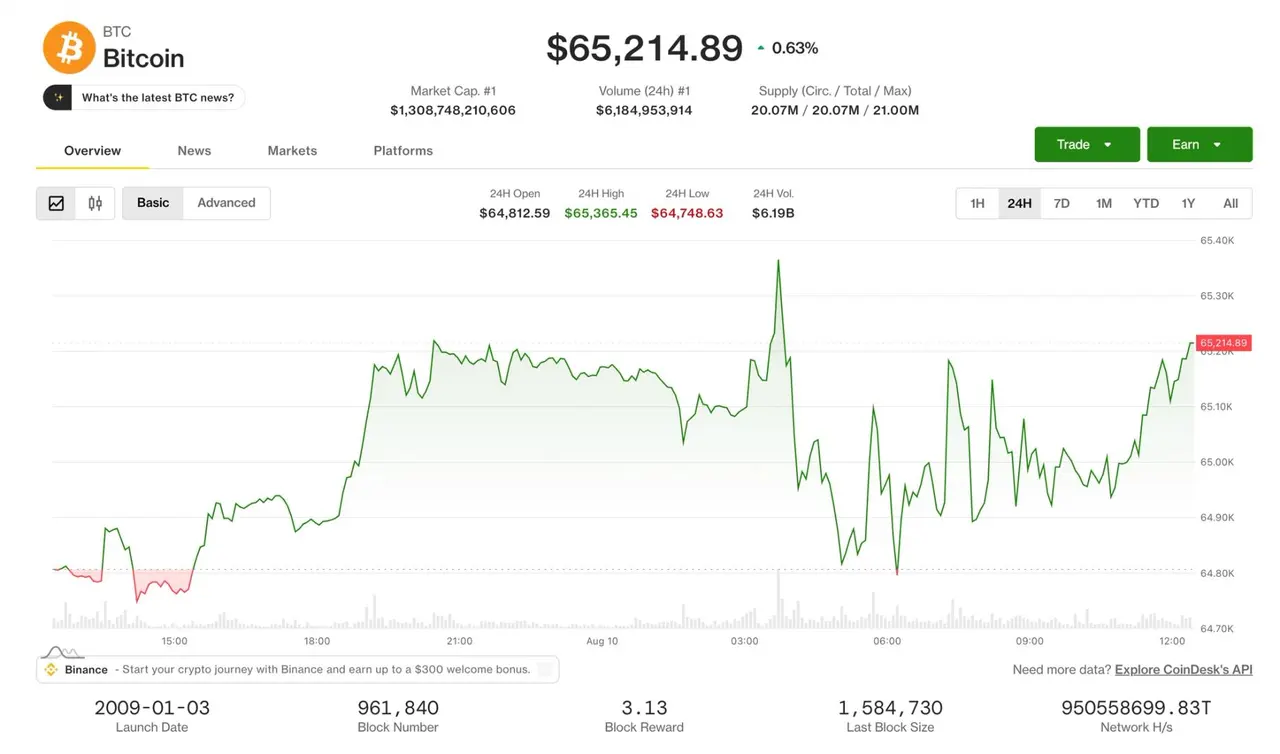
Bitcoin held firmly above $65,000 on Monday, defying expectations that a stalled crypto bill in Washington might dampen sentiment, as steady exchange-traded fund inflows and a weakening dollar propped up prices heading into the summer recess.
Markets Shrug Off Legislative Delay
The Senate declined to advance the CLARITY Act before breaking for its recess, pushing any decision on the market-structure legislation to the fall. The move disappointed some industry advocates who had hoped for movement before lawmakers left town, but the reaction across crypto markets was muted.
Rather than sinking on the news, Bitcoin traded comfortably above the $65,000 mark. Analysts suggested that macro conditions—not Capitol Hill—are driving the current price action, with investors focused on capital flows and broader monetary trends.
When money keeps flowing in and the dollar softens, Washington's timetable becomes a footnote rather than a headline.
What's Driving the Rally
Sustained inflows into spot Bitcoin ETFs continued to provide a steady bid for the asset, absorbing supply and reinforcing demand. Meanwhile, a softer U.S. dollar has made risk assets like cryptocurrencies more attractive to global buyers.
The combination of these factors appears to have outweighed the uncertainty surrounding the delayed legislation. Traders have increasingly treated regulatory milestones as secondary catalysts when underlying demand remains strong.
Key elements supporting the current price level include:
- Consistent ETF inflows adding buying pressure
- A weaker dollar boosting risk appetite
- Limited market disappointment over the Senate delay
Looking Ahead to the Fall
With the CLARITY Act now expected to be revisited when lawmakers return, the crypto industry faces a longer wait for clarity on market-structure rules. Supporters argue that a defined framework would reduce uncertainty and encourage broader institutional participation.
For now, however, the market's resilience suggests that price direction is being set by flows and macro dynamics rather than the legislative calendar. Whether that holds through the fall—when Congress could take up the bill again—remains a key question for traders watching both charts and Capitol Hill.