
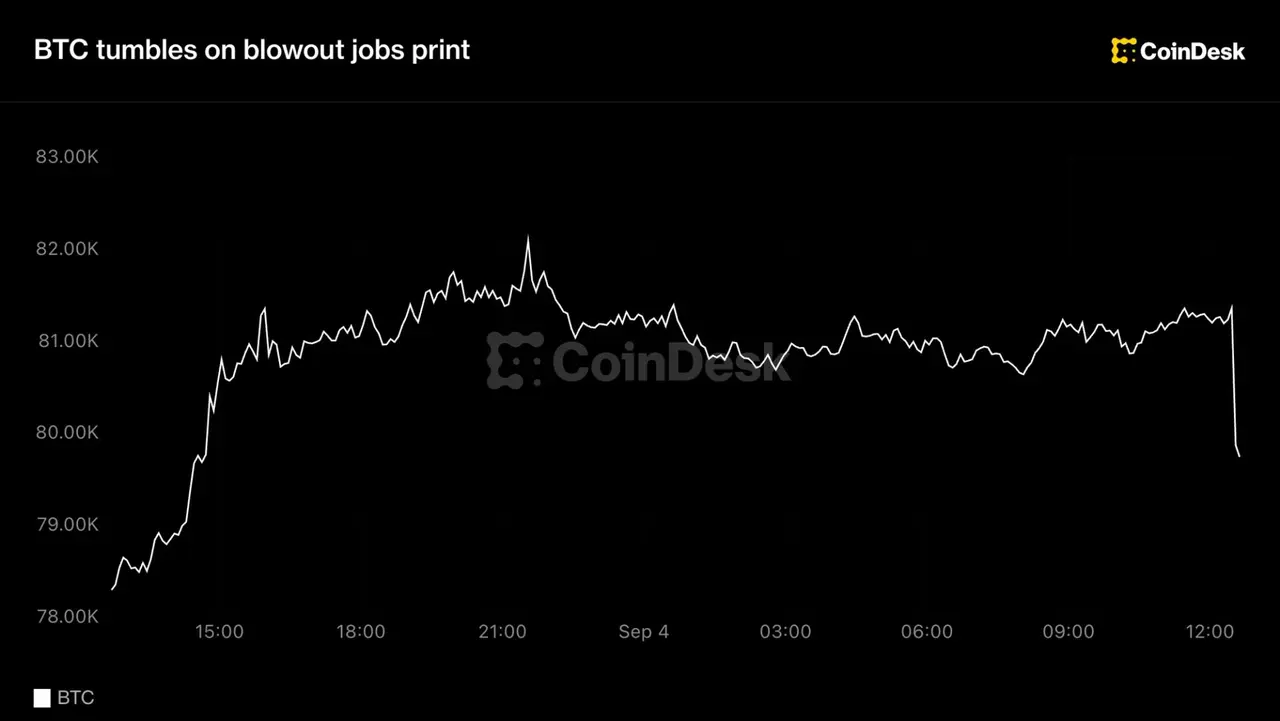
Bitcoin dropped sharply on Thursday following a stronger-than-expected August jobs report, even as spot bitcoin exchange-traded funds notched their largest single-day inflow since January.
Markets React to Jobs Data
The cryptocurrency slid after the U.S. labor market delivered a blowout August employment figure that came in well above analyst forecasts. The robust print reshaped expectations around the Federal Reserve's policy path, with traders scaling back bets on aggressive rate cuts. Risk assets, including bitcoin, felt the pressure as stronger economic data reduced the likelihood of imminent monetary easing.
The reaction underscored how closely digital assets continue to track macroeconomic signals. When jobs numbers surprise to the upside, the case for looser policy weakens, and speculative assets often bear the brunt of the repricing.
Strong hiring numbers gave the market a jolt, sending bitcoin lower even as institutional money kept flowing in.
ETF Inflows Hit a Milestone
Despite the price drop, spot bitcoin ETFs told a different story on the demand side. The funds pulled in $731 million in a single session — their biggest haul since January — pushing total net assets across the products past $103 billion for the first time.
BlackRock's IBIT continued to dominate the field, accounting for well over half of the money parked in these vehicles. The asset manager's product has consistently outpaced rivals since the ETFs launched, cementing its position as the go-to gateway for institutional and retail investors seeking bitcoin exposure through traditional brokerage accounts.
The surge in inflows highlights a divergence between short-term price action and longer-term accumulation trends. Even as the spot price wobbled on macro headlines, buyers kept adding to their positions through regulated fund structures.
- Spot bitcoin ETFs drew $731 million, the largest daily inflow since January
- Total net assets crossed the $103 billion threshold for the first time
- BlackRock's IBIT held the lion's share of the assets
The contrast between falling prices and rising fund assets suggests conviction among institutional players remains intact, even as traders navigate an uncertain rate environment heading into the fall.