
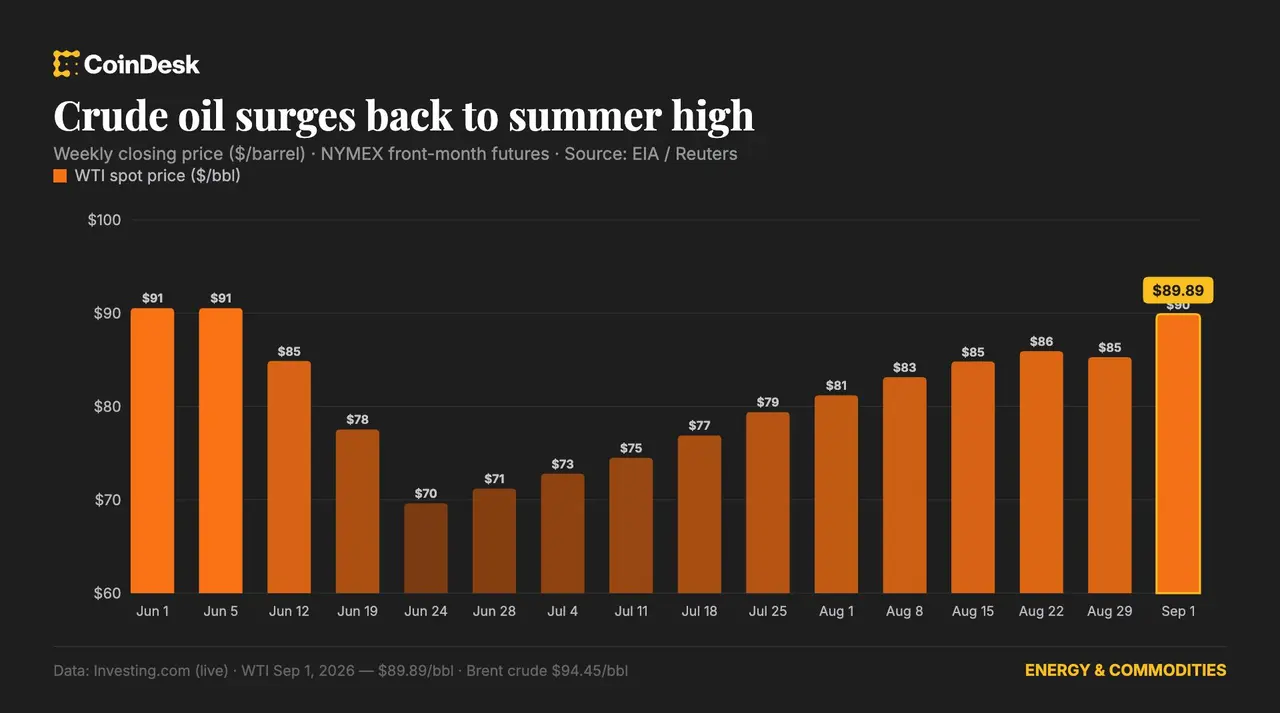
Bitcoin edged lower on Tuesday as fresh geopolitical tensions in the Middle East sent oil prices climbing to a three-month peak, even as spot exchange-traded funds tracking the two largest cryptocurrencies continued to draw fresh money from investors.
Markets React to Renewed Middle East Tensions
New military strikes on Iran rattled global markets, driving crude oil to its highest level in roughly three months. The surge in energy prices added to broader risk-off sentiment, weighing on bitcoin as traders reassessed their exposure to higher-volatility assets.
The world's largest cryptocurrency slipped amid the turbulence, tracking a familiar pattern in which geopolitical shocks tend to pressure digital assets in the short term. Investors often rotate toward perceived safe havens during periods of heightened uncertainty, and rising oil costs stoke fresh concerns about inflation.
When missiles fly and oil spikes, bitcoin often feels the tremors first.
ETF Inflows Tell a Different Story
Despite the price weakness, institutional appetite for crypto through regulated funds showed resilience. Spot bitcoin ETFs pulled in $217 million on Monday, reversing course just one session after an outflow that had snapped a nine-day streak of consecutive inflows.
The renewed buying suggests that longer-term allocators remain undeterred by near-term volatility, treating dips as entry points rather than exits.
Ether-focused ETFs have proven even steadier. The funds have avoided net outflows since the middle of August, stretching their run of positive or neutral sessions to 11 days and underscoring growing demand for exposure to the second-largest cryptocurrency.
- Bitcoin ETFs recorded $217 million in inflows on Monday
- The inflow followed a single outflow that broke a nine-day streak
- Ether ETFs have not seen net outflows since mid-August
The contrast between softening spot prices and steady fund inflows highlights a market split between reactive traders responding to headlines and patient investors building positions through regulated vehicles.