
Bitcoin held steady near $63,500 as traders weighed the collapse of a 60-day truce between the United States and Iran, a development that has once again put oil markets—and by extension risk assets like crypto—on edge.
## Geopolitical Tensions Return to the Fore The expiration of the ceasefire without a fresh agreement has brought shipping through the Strait of Hormuz to a near standstill. The narrow waterway is one of the most critical chokepoints for global oil transit, and any disruption there tends to send energy prices climbing.
Rising oil costs have repeatedly weighed on cryptocurrency markets throughout the summer, feeding inflation fears and dampening appetite for speculative assets. With the truce now lapsed, that familiar pressure has resurfaced, keeping bitcoin range-bound rather than breaking higher.
When the Strait of Hormuz goes quiet, oil gets loud—and crypto tends to feel the tremors.
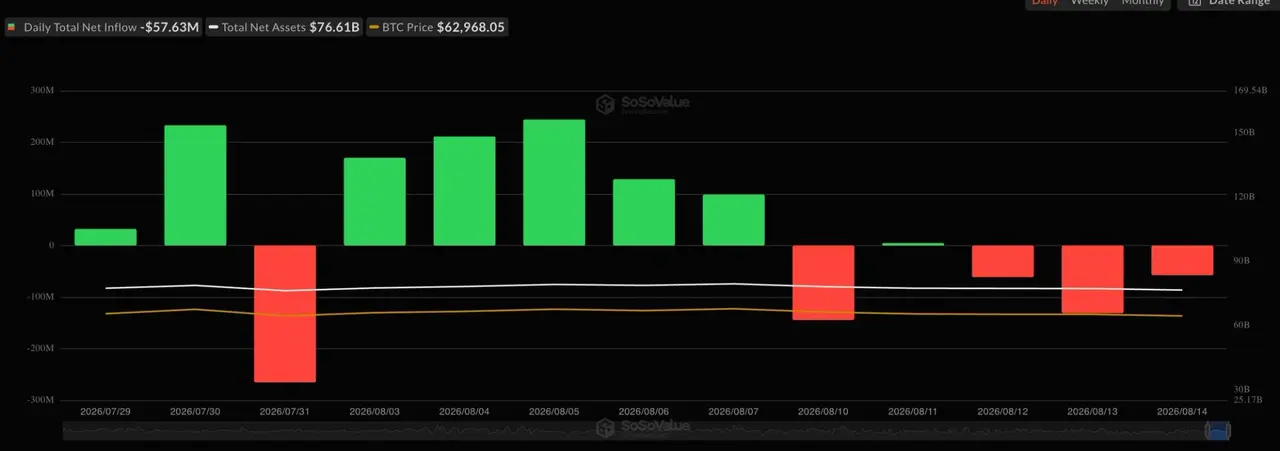
## ETF Flows Quietly Shift Beneath the flat price action, the flow picture is beginning to change. Exchange-traded fund activity, which has served as a key barometer of institutional sentiment, appears to be turning after a stretch of muted demand.
These shifts often precede more pronounced price moves, as sustained inflows or outflows signal how larger allocators are positioning themselves. Traders are watching the data closely for confirmation of a new trend.
For now, bitcoin's stability masks the competing forces at play:
- Geopolitical risk from the lapsed US-Iran ceasefire
- Renewed oil-price threats tied to Hormuz shipping
- A quiet but potentially meaningful turn in ETF flows
The combination leaves the market in a holding pattern, with the next decisive move likely hinging on whether energy tensions escalate or fresh capital continues to move into crypto funds.