
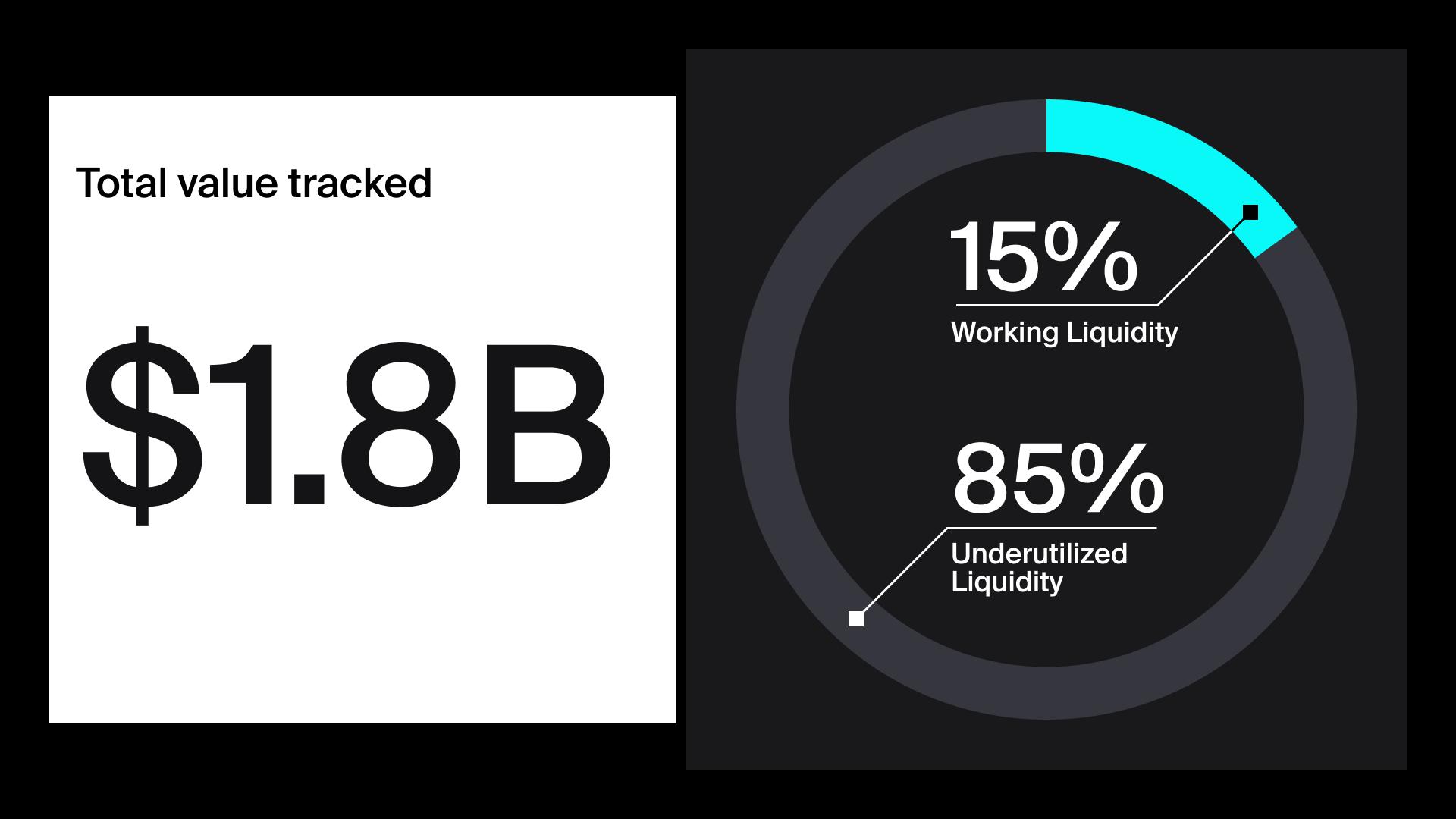
Roughly $1.6 billion in cryptocurrency liquidity is sitting dormant across decentralized exchanges, generating no trading fees and offering no meaningful market depth, according to recent data on how capital is deployed in automated market makers.
The Problem With Idle Capital
At the heart of the issue is the way liquidity is distributed on decentralized trading platforms. Data indicates that around $542 million in liquidity was parked outside of active trading ranges on a weekly basis, effectively rendering it useless for the markets it was meant to support.
When liquidity providers deposit assets into a concentrated liquidity pool, they set a price range in which their capital is active. If the market price moves outside that band, the position stops earning fees and no longer contributes to the depth traders rely on to execute orders efficiently.
Capital that isn't working isn't just unproductive — it's a silent drag on the entire market's efficiency.
The cumulative effect is significant. Instead of tightening spreads and cushioning large trades, this stranded capital simply waits, providing no return to its owners while leaving order books thinner than they appear on the surface.
Why It Matters for Traders and Providers
For liquidity providers, misplaced capital represents a direct opportunity cost. Fees that could be earned from active trading go uncollected, and the funds remain exposed to the volatility of the underlying assets without any offsetting income.
For traders, the consequences show up as reduced effective depth. Markets that look well-capitalized on paper may deliver worse pricing and higher slippage when large orders arrive, because much of the advertised liquidity is not positioned where trades are actually happening.
Several factors contribute to the mismatch between where liquidity is deployed and where it is needed:
- Rapid price swings that push positions outside their chosen ranges
- Providers setting overly narrow or poorly calibrated bands
- A lack of active management to rebalance positions as conditions change
Addressing the inefficiency will likely require better tooling for liquidity management and smarter strategies for keeping capital aligned with live market prices. Until then, a substantial share of the money meant to grease the wheels of decentralized trading will continue to sit idle, earning nothing and helping no one.