
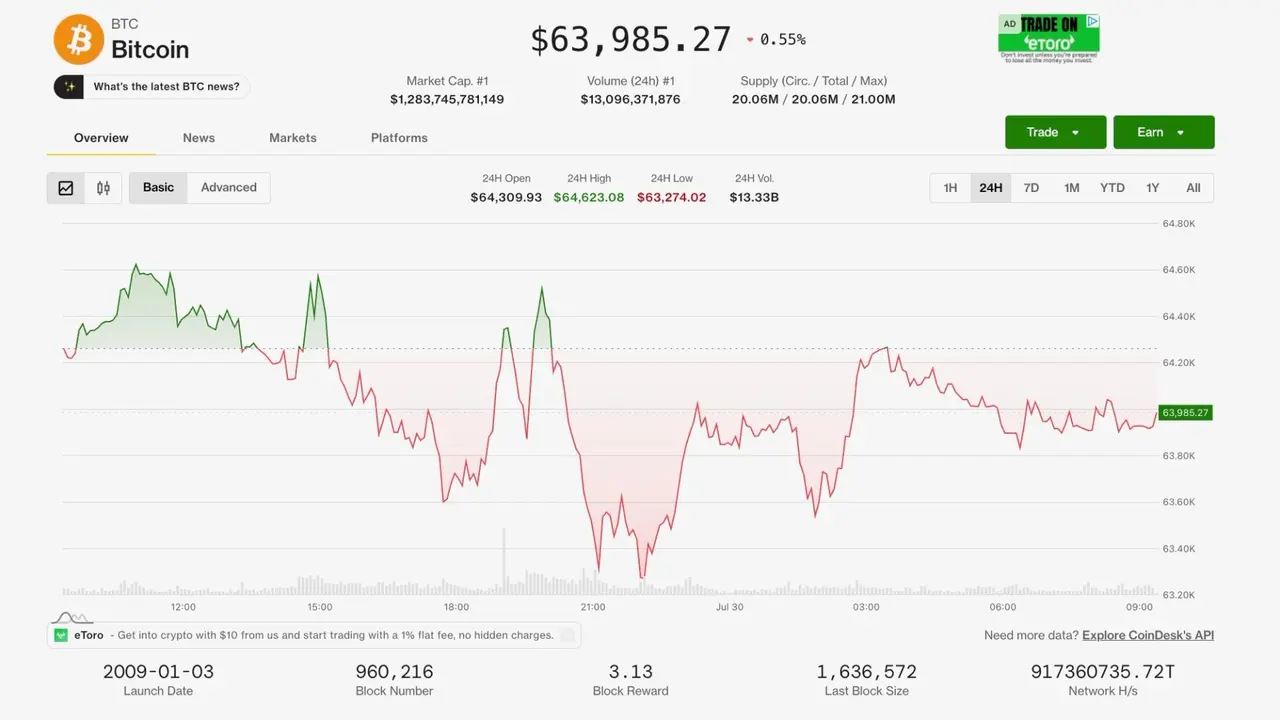
Bitcoin defied a wave of geopolitical and monetary turbulence, clinging to the $64,000 level even as a fresh round of Iranian missile strikes, a spike in oil prices, and hawkish signals from the Federal Reserve rattled traditional markets.
## Markets Buckle Under Multiple Shocks Crude oil jumped roughly 8% overnight following ballistic missile strikes by Iran, reigniting fears of a wider conflict in the Middle East and threatening global energy supplies. The escalation sent equities tumbling, with the Dow Jones Industrial Average dropping 2.2% and the Nasdaq sliding to its lowest point in three months.
Adding to the pressure, the Federal Reserve delivered a divided message on interest rates, with policymakers signaling that further hikes remain on the table. The hawkish tilt unsettled risk-sensitive assets across the board, deepening losses in stocks and heightening investor anxiety.
Bitcoin barely flinched while Wall Street reeled — a rare show of steadiness amid chaos.
## Crypto Holds Its Ground Against that backdrop, bitcoin's ability to hold near $64,000 stood out. The largest cryptocurrency by market value avoided the sharp declines seen in equity indexes, offering a test of the digital asset's resilience during periods of acute stress.
Traders have long debated whether bitcoin behaves as a risk asset that falls alongside stocks or as a hedge that decouples during turmoil. The latest episode gave ammunition to those who argue the token can withstand shocks that hammer conventional markets.
Still, the environment remains precarious. A combination of higher energy costs, restrictive monetary policy, and geopolitical uncertainty could weigh on sentiment across all asset classes if tensions worsen.
Key pressures facing markets:
- Oil surging about 8% on Middle East conflict fears
- The Dow falling 2.2% and the Nasdaq hitting a three-month low
- A hawkish Fed split hinting at additional rate increases
For now, crypto's stability offers a measure of reassurance to holders, but analysts caution that continued volatility in oil and equities could quickly change the calculus.