
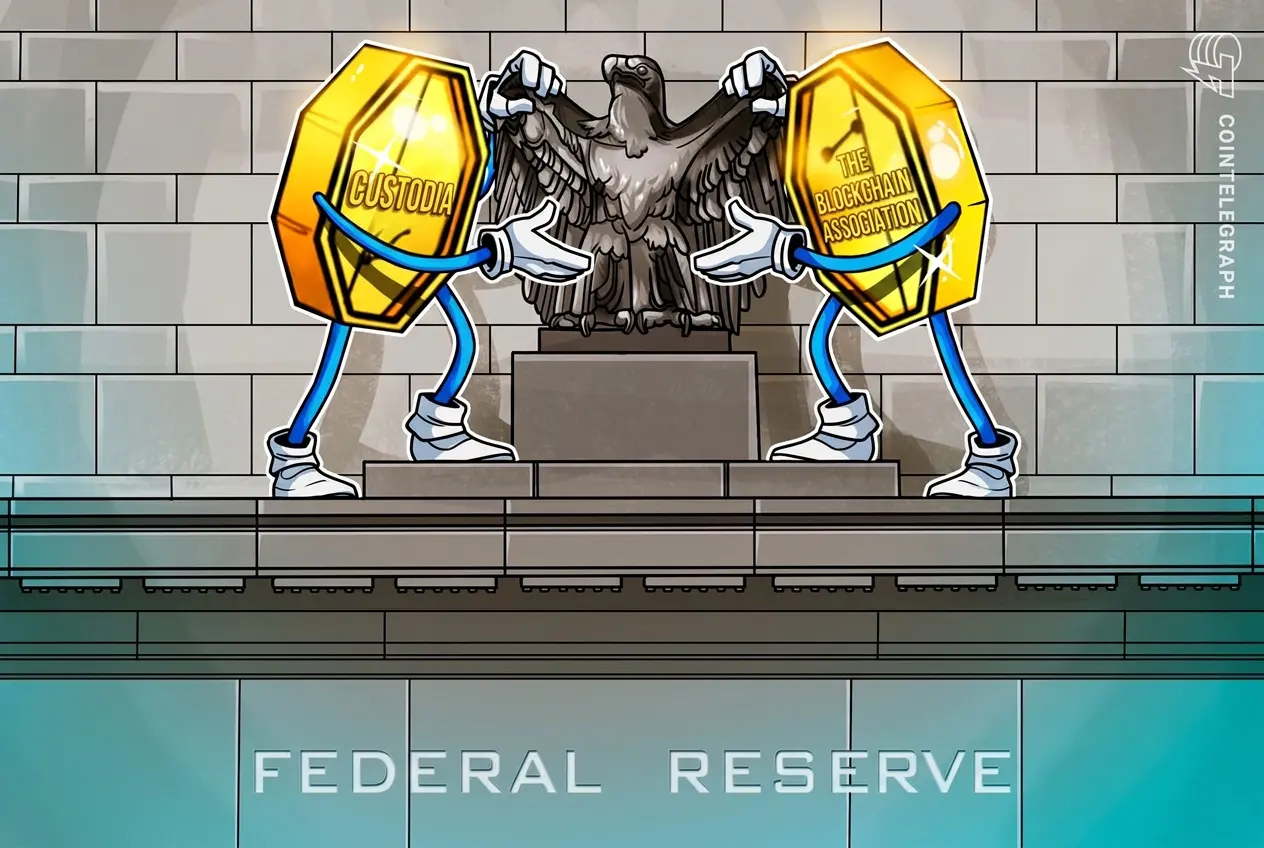
A leading cryptocurrency advocacy organization has thrown its weight behind Custodia Bank in a Supreme Court dispute that could reshape how state-chartered institutions access the Federal Reserve's payment infrastructure.
The Heart of the Dispute
The Blockchain Association has filed in support of Custodia Bank, contending that the Federal Reserve should not wield unchecked discretion to reject eligible state-chartered banks seeking direct access to its payment system. At the center of the fight is the coveted "master account," a gateway that allows financial institutions to plug directly into the central bank's settlement rails without relying on intermediary banks.
Custodia, a Wyoming-chartered institution focused on digital assets, has been battling for such access for years. The bank argues that the law entitles qualifying institutions to a master account, while the Fed maintains it retains the authority to weigh applications and deny those it deems risky.
The question is whether the central bank can act as gatekeeper or must open its doors to every eligible applicant.
Why It Matters for Crypto
For crypto-focused banks, a master account is more than a technical convenience — it is a critical link to the broader financial system. Without it, institutions must depend on partner banks, adding cost, friction, and uncertainty to their operations.
The Blockchain Association frames the case as a matter of fairness and consistency, warning that broad Fed discretion could leave innovative firms at the mercy of subjective decisions. Supporters argue that clear rules would give the industry the regulatory certainty it has long sought.
Key stakes in the case include:
- Whether the Fed must grant accounts to all legally eligible state-chartered banks
- The future of digital-asset banks operating under state charters
- Broader precedent for how regulators treat crypto-adjacent financial firms
Should the Supreme Court take up and rule on the matter, the outcome could set a lasting standard for how emerging financial institutions gain entry to the nation's core payment systems.