
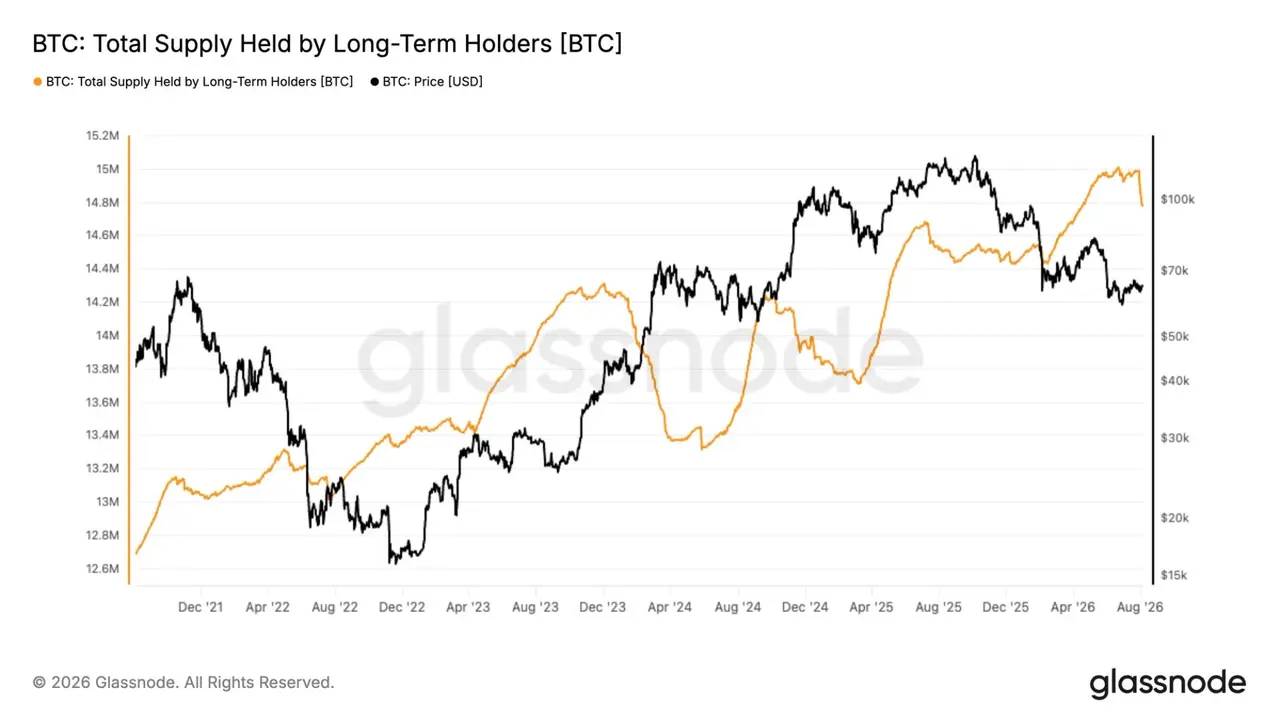
Roughly 210,000 bitcoin has shifted out of long-dormant wallets over the past week, a wave of onchain movement that analysts say points to custody changes rather than a rush to sell.
What the Onchain Data Shows
Blockchain trackers registered an unusually large volume of bitcoin leaving wallets classified as belonging to long-term holders. The scale of the movement—roughly 210,000 BTC—stands out because coins held in these addresses typically sit untouched for months or years, making them a closely watched signal of investor conviction.
Rather than flowing directly onto exchanges, where selling pressure usually originates, much of the bitcoin appears to have been redistributed across new addresses. That pattern suggests holders are reorganizing where and how their coins are stored instead of cashing out.
When coins move but don't hit exchanges, it usually means a change of address, not a change of heart.
The Coldcard Connection
Observers have tied the activity to fallout surrounding Coldcard, a widely used hardware wallet favored by security-conscious bitcoin holders. Concerns circulating among users appear to have prompted a coordinated effort to migrate funds to fresh wallets and setups.
The behavior underscores how quickly the bitcoin community can react to perceived risks in the tools they rely on to safeguard private keys. For long-term holders, moving coins to a new, trusted custody arrangement is a defensive measure rather than a market bet.
Key takeaways from the movement include:
- The roughly 210,000 BTC shift came from long-term holder wallets
- Coins largely went to new addresses instead of exchanges
- Analysts read the activity as custody migration, not selling
For the broader market, the distinction matters. Large outflows from dormant wallets can spook traders who fear a coming sell-off, but redistribution into non-exchange addresses tends to signal the opposite—holders reinforcing their positions and prioritizing the security of their holdings.