
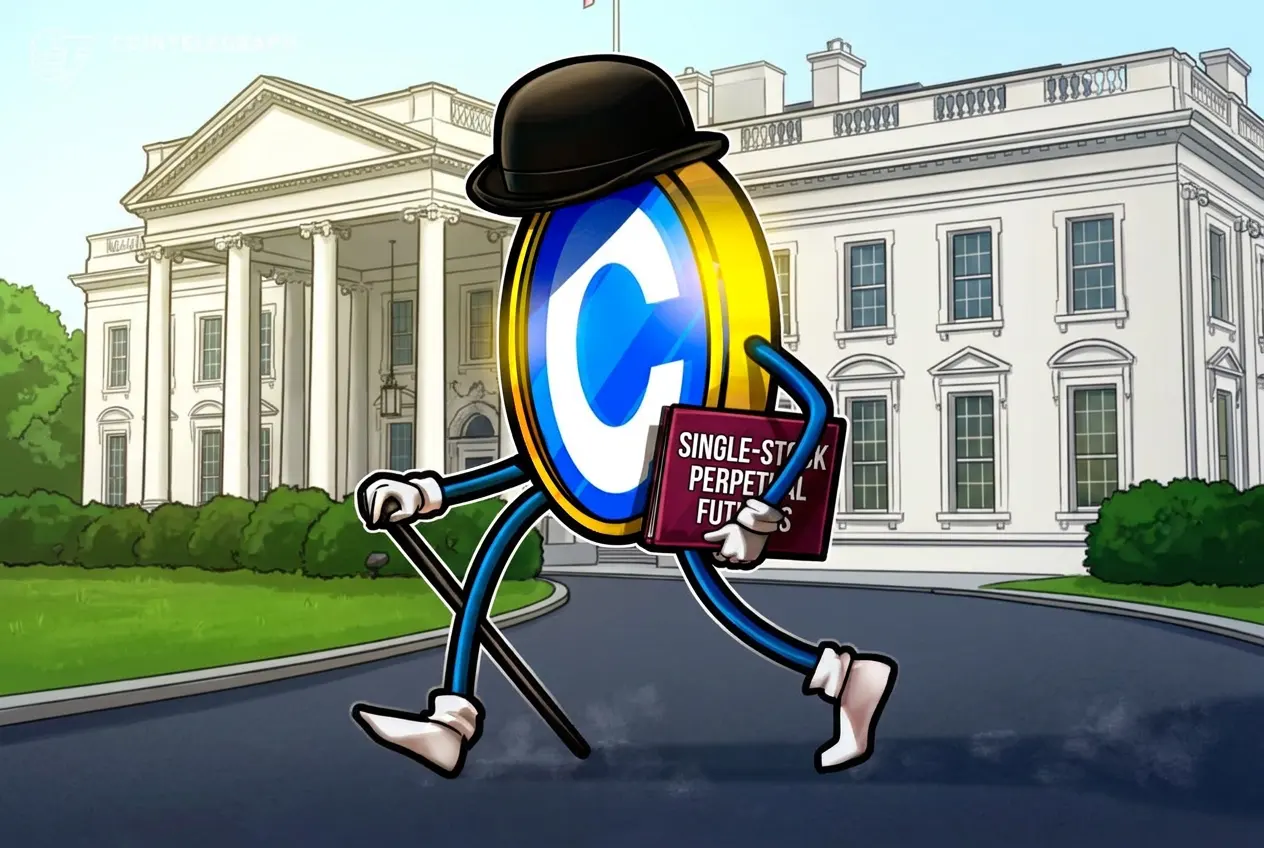
Coinbase has filed with US regulators to launch single-stock perpetual futures, a move that would let American traders speculate on individual equities nearly around the clock through the crypto exchange's derivatives platform.
What Coinbase Is Proposing
The exchange is seeking regulatory clearance to offer perpetual futures contracts tied to individual US stocks. Unlike traditional stock trading, which is confined to standard market hours, the proposed contracts would allow trading five days a week on a nearly continuous basis, giving users far greater flexibility around when they can enter and exit positions.
Perpetual futures are a derivatives product long associated with cryptocurrency markets. They differ from conventional futures in that they carry no expiration date, allowing traders to hold positions indefinitely as long as they meet margin requirements. Coinbase is now aiming to bring that same structure to equities.
Coinbase wants to give US traders a way to bet on single stocks nearly around the clock.
Regulatory Hurdles Ahead
The proposed contracts are awaiting sign-off from regulators before they can go live. That approval process represents a significant hurdle, as single-stock derivatives sit at the intersection of securities and commodities oversight, an area that has historically drawn careful scrutiny.
The filing reflects Coinbase's broader ambition to expand beyond spot crypto trading and build out a more comprehensive derivatives business. By pushing into equity-linked products, the company is positioning itself to compete more directly with traditional brokerages and futures venues.
Key features of the proposed offering include:
- Perpetual futures with no expiration date
- Trading availability five days a week on a near-continuous basis
- Contracts tied to individual US stocks rather than crypto assets
If approved, the product would mark a notable step in the convergence of crypto-native trading mechanics and traditional financial markets, blurring the line between the two sectors for retail and institutional participants alike.