
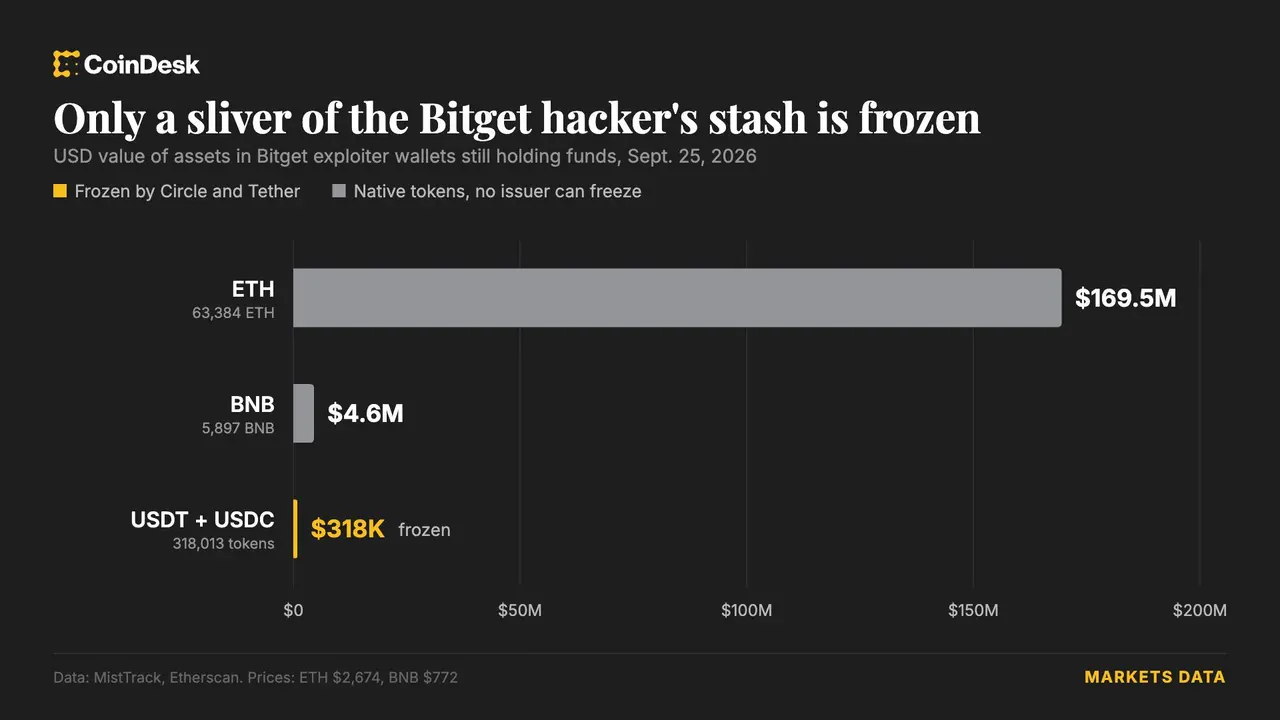
Stablecoin giants Circle and Tether have moved to freeze a wallet linked to a major security breach at crypto exchange Bitget, blacklisting roughly $318,000 in USDT and USDC held by the attacker. The action, however, represents only a fraction of the total losses, as the bulk of the stolen assets remain in ether — a token that cannot be frozen.
A Rapid Response to the Breach
Following the theft, both issuers acted to lock down the portion of stolen funds denominated in their respective stablecoins. By blacklisting the wallet address, Circle and Tether effectively rendered the USDT and USDC balances unusable, preventing the hacker from moving or cashing out those specific tokens.
The intervention highlights one of the key advantages centralized stablecoin issuers hold over decentralized assets: the ability to reverse or restrict transactions tied to illicit activity. When a wallet is blacklisted, the frozen tokens can no longer be transferred, sold, or redeemed.
The freeze locked down the stablecoins, but the majority of the loot slipped through in a currency no issuer can touch.
The Limits of Freezing Stolen Crypto
Despite the swift response, the frozen amount — about $318,000 — is dwarfed by the total value siphoned in the attack. Most of the stolen funds sit in ether, Ethereum's native cryptocurrency, which operates without a central authority capable of blacklisting addresses or clawing back transactions.
This distinction underscores a persistent challenge for the industry. While stablecoin issuers can intervene to protect their users and recover some assets, truly decentralized tokens like ether offer no such recourse once they leave a victim's control.
- Circle and Tether blacklisted a wallet holding roughly $318,000 in USDT and USDC.
- The frozen funds represent only a small share of the total heist.
- The majority of the stolen assets are in ether, which cannot be frozen.
For Bitget users and the broader market, the incident serves as a reminder that the composition of stolen assets often determines how much can realistically be recovered. As hackers increasingly favor harder-to-trace and non-freezable tokens, the effectiveness of issuer-led interventions continues to face real limits.