
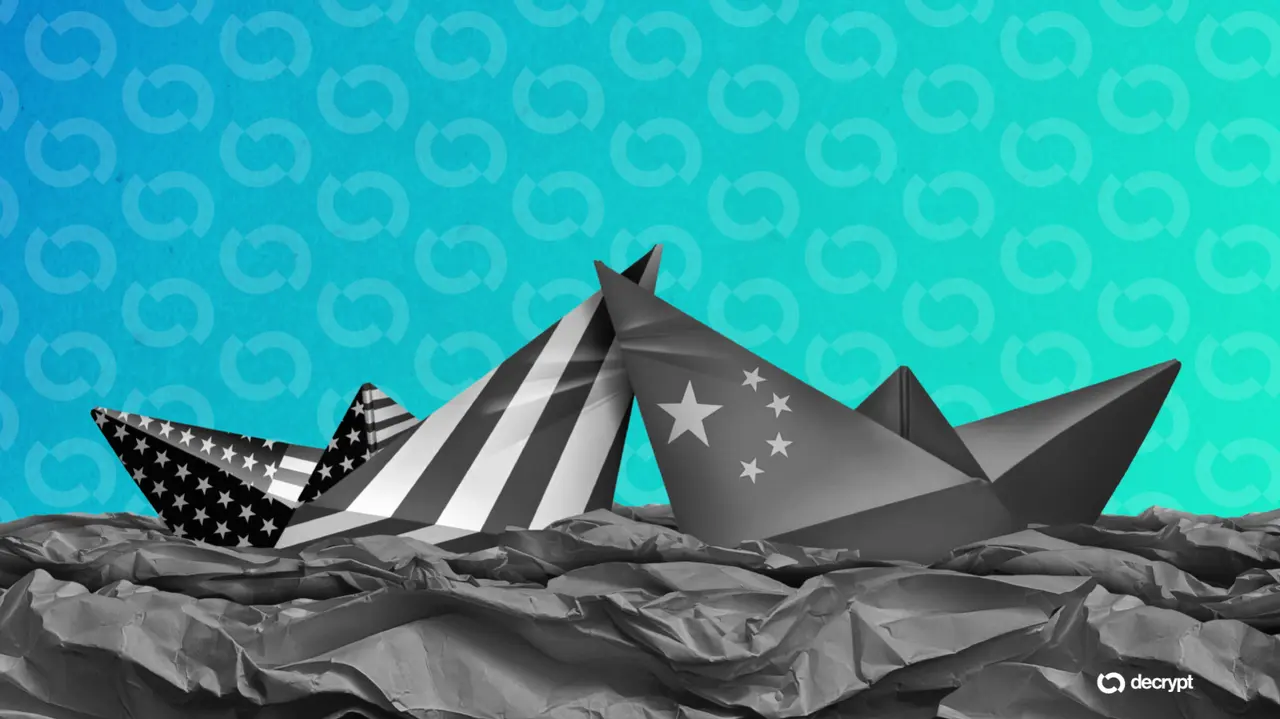
China appears to be quietly building the infrastructure to control the export of its artificial intelligence technology, according to recent reports, echoing measures the United States adopted earlier this year. The shift suggests Beijing is preparing to dictate where and how its most advanced AI systems can be deployed beyond its borders — a playbook Washington has already put into motion.
Beijing Mirrors Washington's Approach
The reported move represents another escalation in the technology rivalry between the world's two largest economies, where AI has increasingly come to be treated as a strategic national asset rather than an ordinary commercial product.
The United States established the template earlier this year when it acted to restrict the cross-border flow of advanced AI capabilities. In June, Washington introduced measures affecting Anthropic, one of America's leading AI developers, setting a precedent for using export controls to govern the international spread of frontier systems.
China now seems to be assembling comparable tools of its own. By developing the means to limit AI exports, Beijing would acquire leverage over the global footprint of its technology — much as the US has done to keep its most sophisticated tools within a controlled orbit.
Access to the world's most advanced artificial intelligence could increasingly be dictated by national security priorities rather than open markets.
AI as a Defense-Sensitive Technology
The parallel actions reflect a broader trend among leading AI powers, which are growing wary of letting their most capable systems circulate freely. Technology once framed primarily as a commercial offering is now being treated with the same caution typically reserved for defense-sensitive capabilities.
Several forces are driving the change:
- The rising view of AI as a national security concern
- The precedent set by US export restrictions touching firms like Anthropic
- Intensifying technological competition between Washington and Beijing
If China moves to formalize such controls, the effects could ripple across the global market. Nations and companies hoping to obtain cutting-edge systems may find their choices shrinking as both superpowers increasingly guard their homegrown technology.
The trajectory points toward a more fragmented AI landscape, one in which the flow of advanced models is shaped less by commercial demand and more by the strategic calculations of governments determined to keep their sharpest tools close to home.