
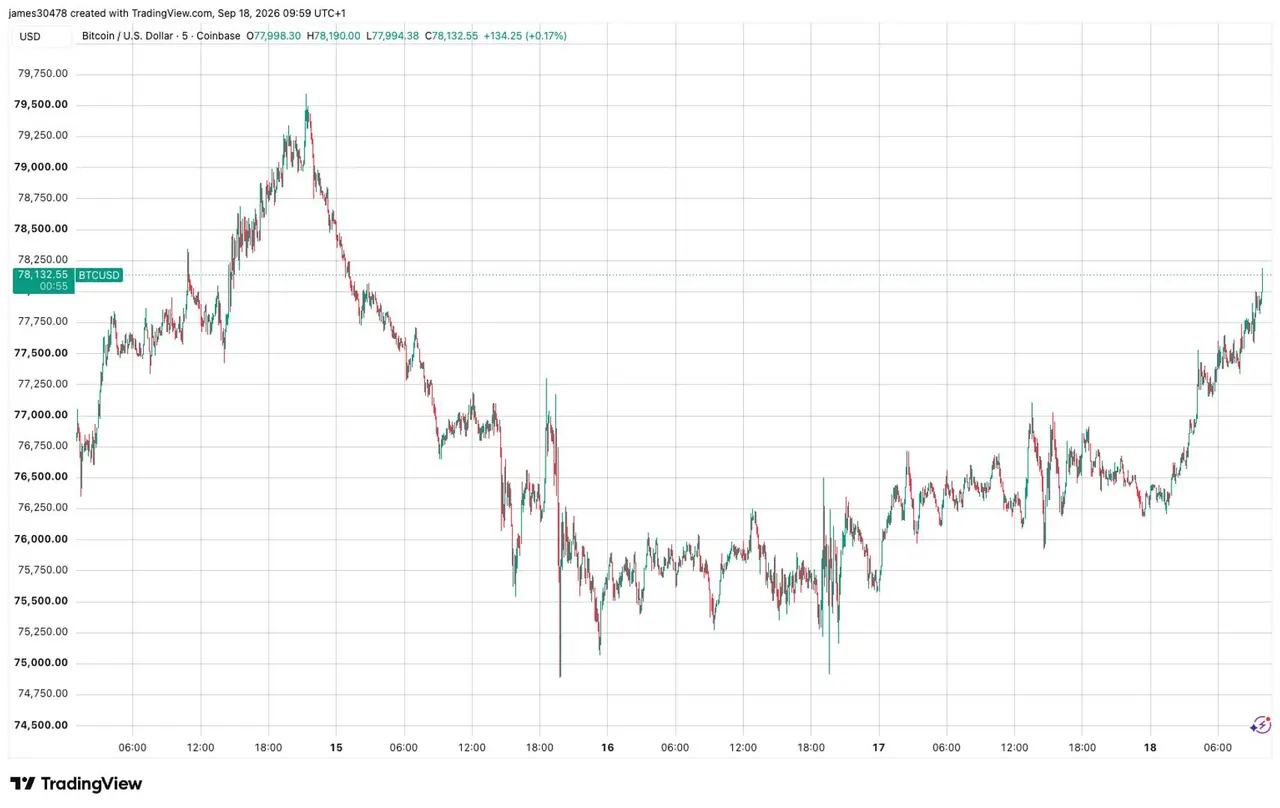
Bitcoin is proving unusually resilient during a month that has historically punished crypto investors, sliding just 1.5% in September even as rising interest rates, surging oil prices and a strengthening dollar mount pressure on risk assets. The world's largest cryptocurrency remains on course for its first quarterly gain in a year.
A Milder September Than Usual
September has long carried a reputation as the cruelest month for bitcoin, with the asset frequently posting steep losses during the period. This year, however, the decline has been modest, a sign that the market may be maturing and finding steadier footing amid broader macroeconomic turbulence.
The relatively contained drop comes despite a challenging backdrop. Interest rate expectations have shifted, energy costs have climbed, and a firmer U.S. dollar has traditionally weighed on assets priced against it. Under those conditions, a loss of just 1.5% reads more like stability than weakness.
Bitcoin's quiet September may be the loudest signal yet that the market is growing up.
Headwinds and a Regulatory Setback
Beyond macro pressures, the crypto industry absorbed a policy disappointment tied to the Clarity Act, a legislative effort watched closely by market participants hoping for clearer regulatory rules. The setback added another layer of uncertainty for investors already navigating a shifting environment.
Still, bitcoin's ability to hold ground suggests that demand and conviction among holders remain firm. Rather than triggering a broad sell-off, the combination of higher rates, costlier oil and a stronger greenback has been met with comparative calm.
Key factors testing the bulls this month include:
- Rising interest rates and shifting policy expectations
- A surge in oil prices squeezing risk appetite
- A stronger U.S. dollar pressuring alternative assets
- A legislative setback involving the Clarity Act
If bitcoin can close out the quarter in positive territory, it would mark its first quarterly gain in a year — a notable turnaround that would reinforce the argument that the asset is weathering adversity better than in past cycles.