
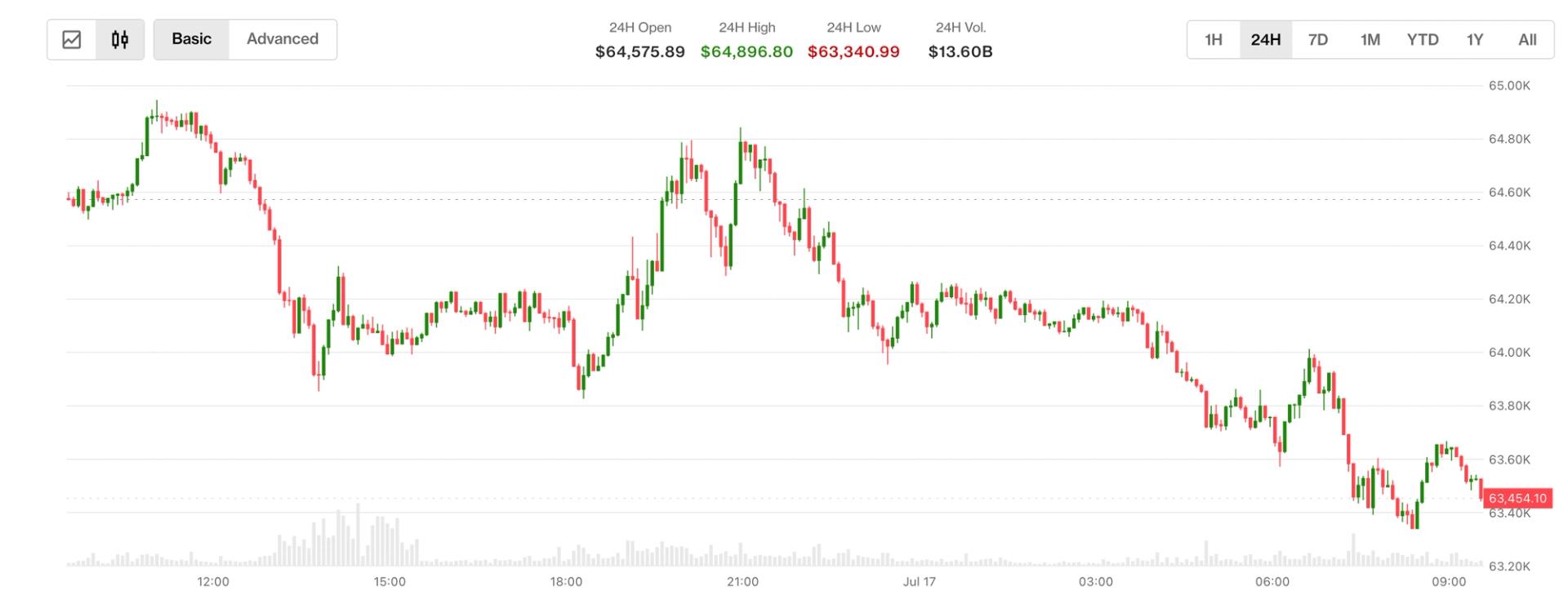
Bitcoin slipped below $63,000 on Friday as fresh geopolitical shocks rattled global markets, with a new U.S. military strike on Iran and pointed remarks from President Donald Trump about China reigniting fears of broader instability and trade friction.
Markets React to Military Escalation
The world's largest cryptocurrency retreated as investors moved away from riskier holdings following news of the latest American strike against Iranian targets. The action revived concerns about a wider conflict in the Middle East, a region whose tensions have historically sent tremors through commodity and financial markets alike.
Bitcoin, which is often treated by traders as a barometer for broader risk appetite, fell alongside equities and other speculative assets. The decline underscored how quickly digital assets can be dragged lower when uncertainty spikes, despite frequent arguments that the token behaves as a safe haven during turmoil.
When geopolitical fear grips the market, bitcoin trades like a risk asset first and a safe haven second.
Trump's China Comments Deepen the Unease
Adding to the jittery mood, Trump's latest comments regarding China stoked worries about renewed friction between the world's two largest economies. Traders are wary that any escalation in rhetoric could spill over into trade policy, tariffs, or other measures that ripple across global supply chains and financial flows.
The combination of a hot military conflict and the specter of a U.S.-China standoff created a double dose of uncertainty, pressuring assets that thrive in calmer, more predictable conditions. Crypto markets, known for their sensitivity to macro headlines, absorbed much of that anxiety.
Key pressures weighing on sentiment included:
- The renewed U.S. strike on Iran and fears of a broadening conflict
- Trump's remarks fanning worries over U.S.-China relations
- A general flight from risk assets across global markets
What Traders Are Watching
Market participants are now closely monitoring how the geopolitical situation evolves, aware that further escalation could push bitcoin lower still, while any signs of de-escalation might allow risk appetite to recover. For now, the mood remains cautious as investors weigh the potential fallout from events unfolding on two major fronts.
The pullback serves as a reminder that even as institutional adoption of digital assets grows, bitcoin remains tightly linked to the wider macroeconomic and geopolitical backdrop.