
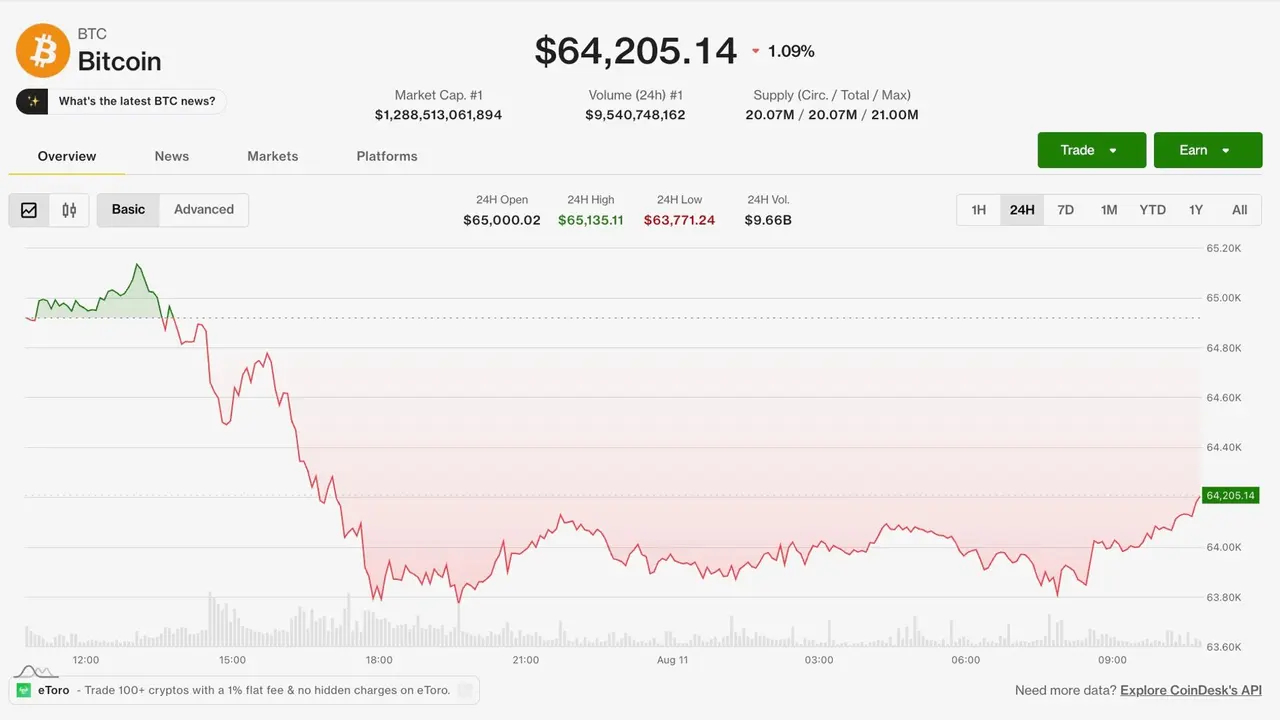
Bitcoin remained mired below $65,000 on Tuesday as hopes for a de-escalation in the Strait of Hormuz standoff faded, dragging broader crypto markets sideways ahead of a closely watched U.S. inflation report. XRP, meanwhile, teetered on the edge of falling under the $1 mark.
Geopolitical Relief Trade Falls Apart
The brief optimism that had lifted risk assets earlier evaporated after former President Donald Trump reportedly demanded that Iran pay 50 years of compensation, a hardline stance that shattered expectations of a quick resolution to tensions around the critical oil shipping route.
The renewed uncertainty pushed crude oil prices back toward $89 a barrel, reversing the recent easing that markets had priced in. With energy costs climbing again, both cryptocurrencies and equities struggled to find direction, ending the session largely flat.
The relief rally investors hoped for never materialized, leaving markets frozen in place.
Traders who had positioned for a calming of Middle East frictions were caught offside as the diplomatic path narrowed. The reversal underscored how sensitive digital assets have become to macro and geopolitical shocks despite their reputation as uncorrelated hedges.
Selling Pressure and a Pivotal CPI Report
Adding to the malaise, corporate treasury selling weighed on bitcoin, squeezing an already cautious market. The combination of geopolitical risk and supply overhang kept the leading cryptocurrency pinned below the psychologically important $65,000 threshold.
Attention now turns to a critical Consumer Price Index release, which could set the tone for risk appetite in the days ahead. A hotter-than-expected inflation print may dash hopes for near-term monetary easing, while a softer reading could give bulls room to run.
Key pressures facing the market include:
- Oil rebounding to roughly $89 per barrel on renewed Hormuz tensions
- Corporate treasury sales adding downward pressure on bitcoin
- Uncertainty surrounding the upcoming CPI data
For now, XRP's slide toward $1 highlights the fragility across the sector, with investors bracing for the inflation numbers that could dictate the next major move.