
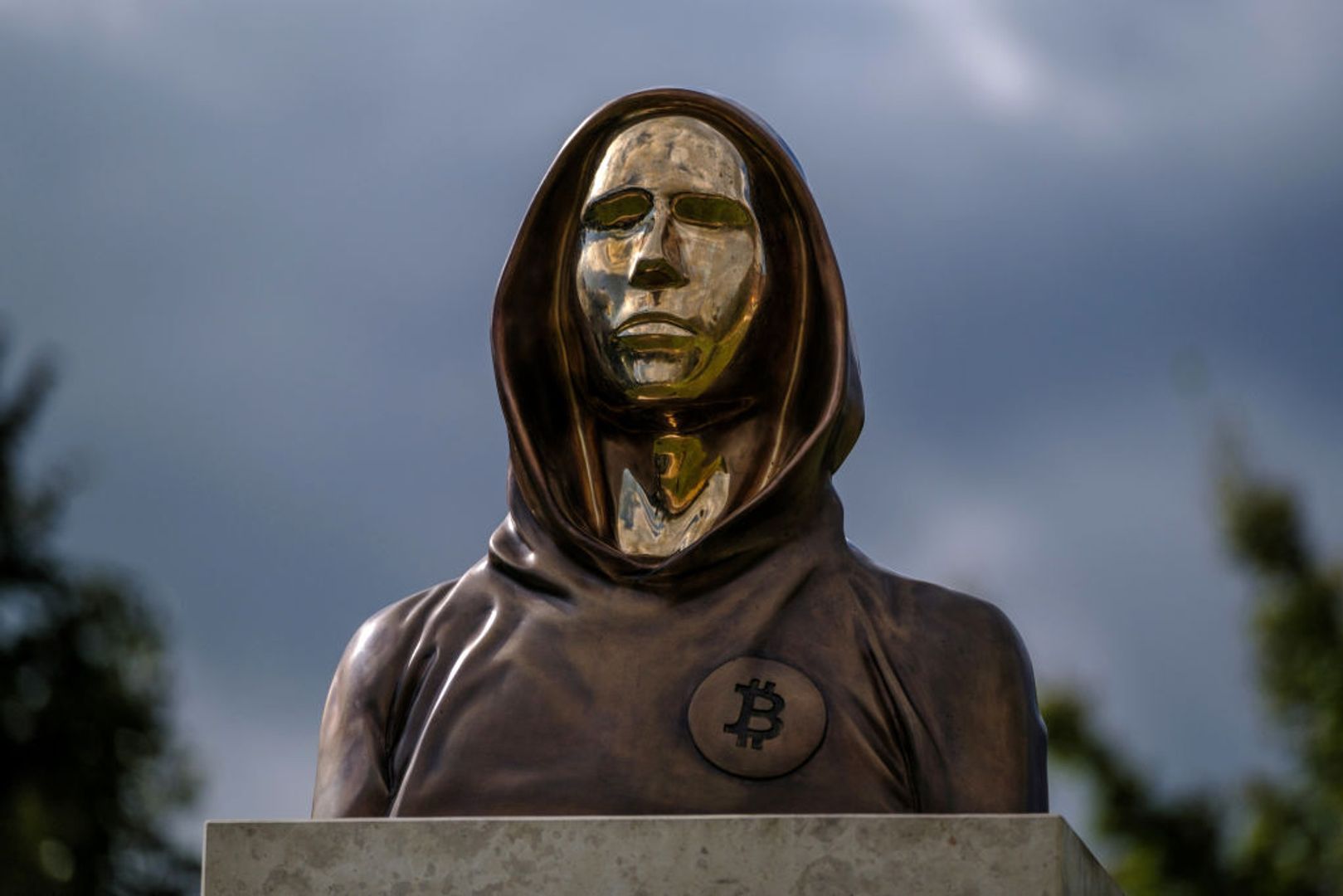
Bitcoin developers have long fretted about the day quantum computers become powerful enough to crack the cryptography protecting user wallets. Now a research group called Project Eleven says it has funded a working proof-of-concept for a recovery mechanism that could help holders prove ownership of their coins even after quantum machines can forge digital signatures — though the fix conspicuously leaves out the roughly 1.1 million coins believed to belong to Bitcoin's pseudonymous creator, Satoshi Nakamoto.
How the Recovery Tool Works
The approach centers on a wallet's key-derivation path, the sequence of steps used to generate the private and public keys that control a set of coins. Project Eleven's proof allows that derivation path to serve as evidence of ownership, giving legitimate holders a way to assert control even if a future quantum computer can reproduce their signatures.
The team reported that the mechanism runs in just 243 milliseconds on an ordinary laptop, a speed that suggests the concept could be practical rather than merely theoretical. That performance is a key selling point, since any quantum-defense measure must be efficient enough to be usable at scale across the network.
A wallet's own key-derivation path could become the proof of ownership that survives a quantum break.
Why Satoshi's Coins Are Left Out
The catch is that the recovery method depends on holders having access to information about how their keys were generated. Satoshi Nakamoto's earliest coins, mined in Bitcoin's infancy, do not fit that model — and no one has moved or claimed them in more than a decade. As a result, those coins would remain exposed if quantum computers eventually reach the necessary capability.
That gap matters because Satoshi's untouched stash represents an enormous, dormant target. If a quantum attacker were able to forge signatures, coins without a recovery path could theoretically be seized by whoever cracks them first, raising thorny questions for the broader network.
- The proof lets a wallet's key-derivation path stand in as ownership evidence.
- It executes in 243 milliseconds on a consumer laptop.
- Satoshi's estimated 1.1 million coins are not covered by the mechanism.
The Bigger Quantum Debate
The work adds to a growing conversation about how and when Bitcoin should upgrade its cryptography to resist quantum attacks. While large-scale quantum computers capable of breaking Bitcoin's signature scheme