
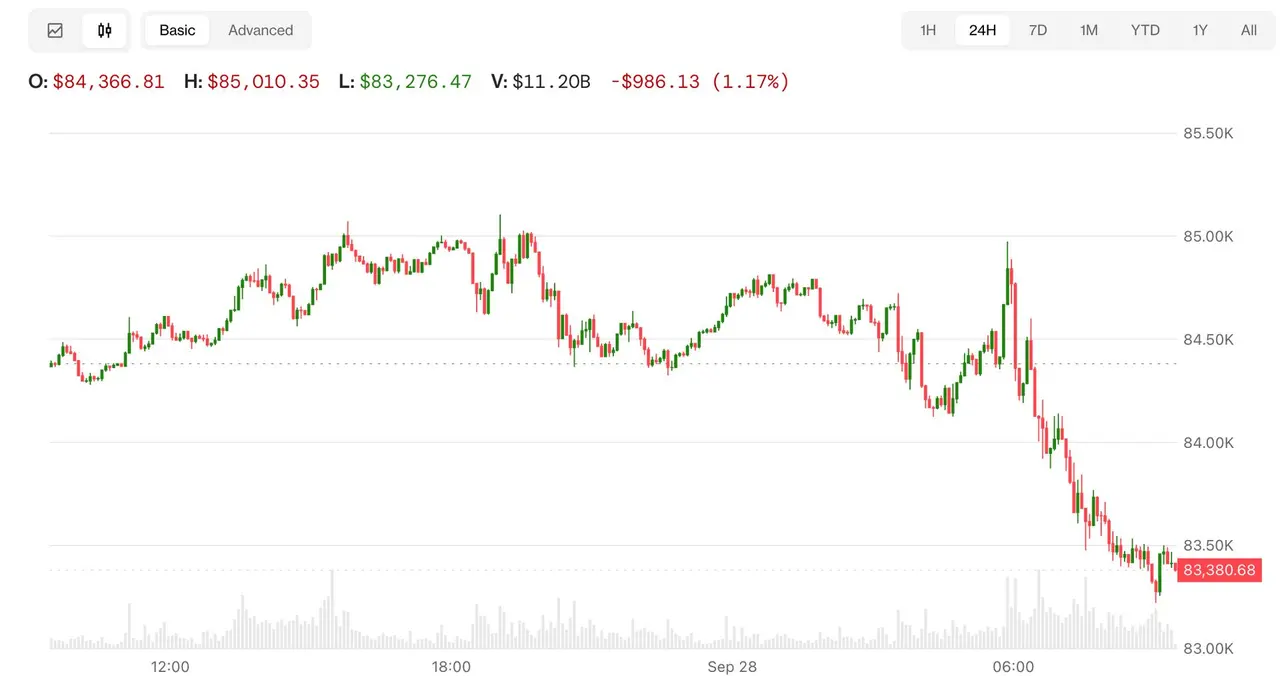
Bitcoin and Nasdaq futures both slipped Sunday after President Donald Trump declined to rule out further military strikes on Iran, unsettling markets already on edge over Middle East tensions.
Markets React to Geopolitical Uncertainty
The price of bitcoin edged lower alongside Nasdaq futures as traders digested Trump's comments over the weekend. The president suggested that additional action against Iran remained possible ahead of the midterm elections, even while expressing optimism that the broader conflict could wind down before long.
Risk assets tend to react sharply to fresh geopolitical flashpoints, and the possibility of renewed strikes injected caution into both crypto and equity markets. Bitcoin, often traded as a risk-on asset in recent years, moved in tandem with tech-heavy stock futures rather than acting as a safe haven.
Uncertainty over the Middle East once again pushed traders toward the exits, dragging both crypto and equities lower.
Mixed Signals From Washington
Trump's remarks left investors weighing two conflicting scenarios: the prospect of escalation on one hand and a near-term resolution on the other. That ambiguity is precisely the kind of environment markets struggle to price, contributing to the pullback.
The reaction underscores how tightly digital assets remain linked to macro and political developments. Rather than trading independently, bitcoin continues to track shifts in broader market sentiment, particularly during periods of heightened global risk.
Key factors weighing on sentiment included:
- The chance of further U.S. strikes on Iran before the midterms
- Ongoing uncertainty about the timeline for ending the conflict
- Weakness in Nasdaq futures spilling over into crypto
For now, traders appear likely to stay defensive until clearer signals emerge on the direction of U.S. policy toward Iran.