
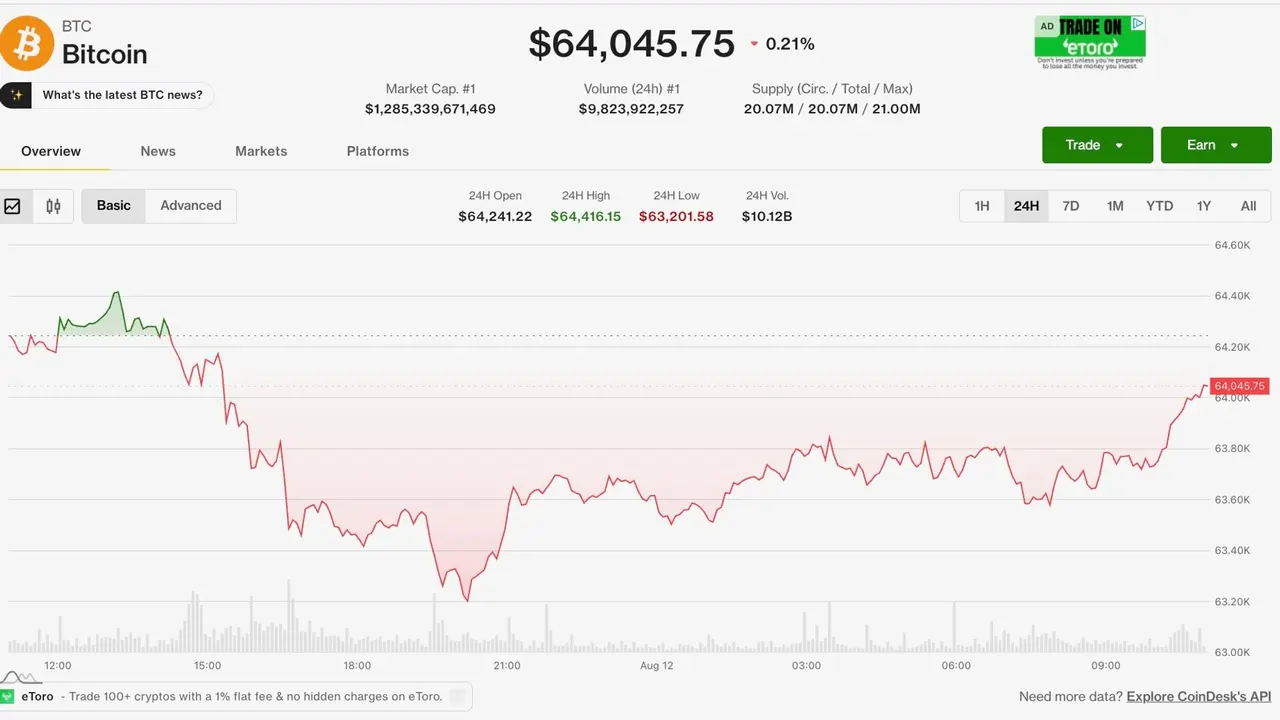
Bitcoin traded near $64,000 on Tuesday as investors held their positions ahead of a closely watched U.S. inflation report, while a fresh security breach on the Harmony network sent tremors through parts of the altcoin market.
Markets Await Inflation Signal
The world's largest cryptocurrency showed minimal movement over the past 24 hours, reflecting a broader hesitancy across financial markets as traders brace for the July consumer price index reading. The data is expected to shape expectations for the Federal Reserve's next policy moves, making participants reluctant to place large directional bets.
The muted price action extended beyond digital assets. Oil hovered near $90 a barrel, underscoring a cautious tone that has settled over global markets during a typically slow summer trading stretch.
When inflation data looms, traders often prefer the sidelines to the risk of being caught wrong-footed.
Analysts note that inflation prints have repeatedly acted as catalysts for sharp swings in risk assets, including crypto. A hotter-than-expected figure could revive concerns about prolonged high interest rates, while a softer reading might fuel renewed appetite for speculative plays.
Harmony Exploit Weighs on Altcoins
Adding to the unease, the Harmony blockchain suffered a fresh exploit, rattling confidence among holders of smaller tokens. Security incidents on individual networks frequently ripple outward, amplifying volatility across the wider altcoin segment even when the broader market stays flat.
The latest breach revives long-standing worries about the resilience of cross-chain infrastructure and the vulnerabilities that continue to plague decentralized protocols. Such events tend to prompt short-term selling as traders reassess risk in affected assets.
Key factors shaping sentiment this week include:
- The upcoming U.S. inflation report and its implications for Fed policy
- Elevated energy prices signaling persistent macro pressures
- Renewed security concerns following the Harmony exploit
For now, bitcoin's steadiness suggests traders are content to wait for clearer macroeconomic signals before committing to the next big move.