
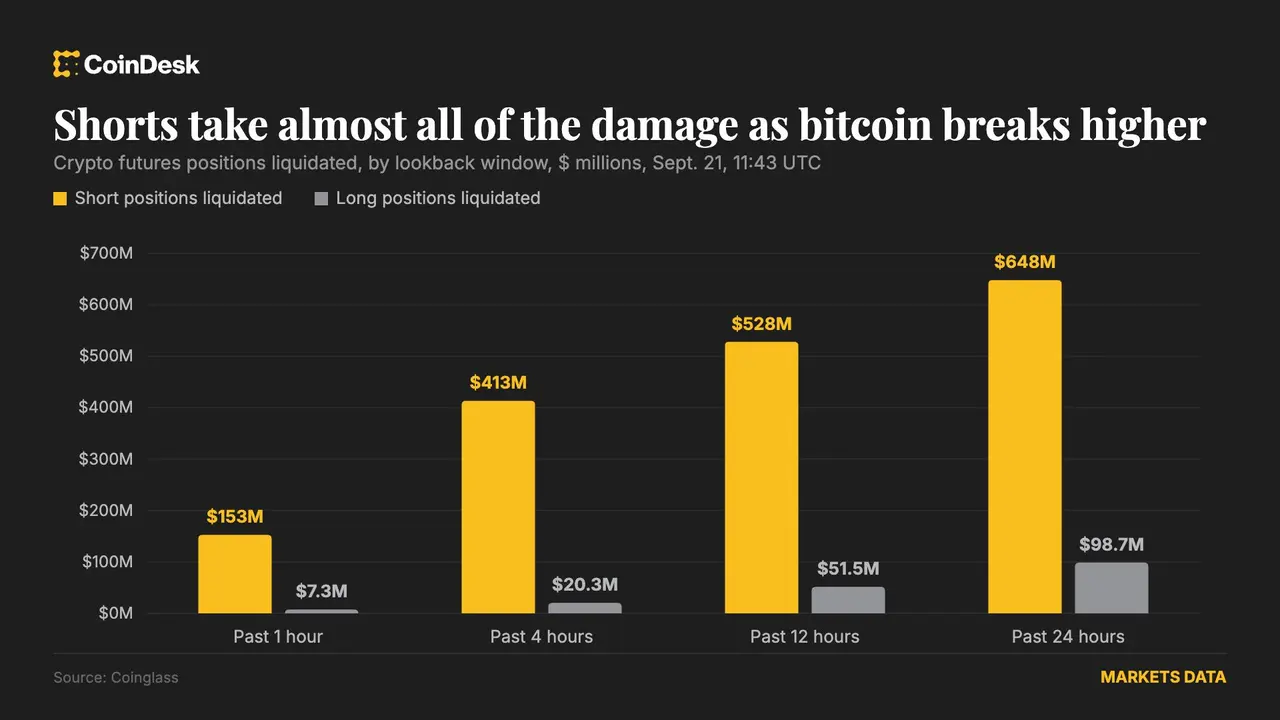
Bitcoin surged to $85,000 in a rapid move that triggered a wave of forced liquidations, wiping out roughly $648 million in bearish bets as short sellers scrambled to cover their positions.
A Classic Short Squeeze
The sharp rally caught traders positioned for a decline off guard. As the price pushed higher, exchanges automatically closed out losing short positions, a cascade that only added fuel to the upward move. When leveraged bets are liquidated, the resulting buy orders can accelerate the price action, creating the self-reinforcing dynamic known as a short squeeze.
The scale of the liquidations underscores how many traders had been betting against Bitcoin ahead of the breakout. With $648 million in bearish positions unwound, the episode ranks among the more significant clearouts of recent sessions.
When shorts get squeezed, their forced buying becomes the very fuel that drives prices higher.
Traders Chasing the Move
Rather than retreating after the volatility, market participants appear to be leaning into the rally. Open interest — the total value of outstanding derivatives contracts — climbed 7.59% to $156 billion even as older positions were being closed out. That combination is telling.
Normally, a large round of liquidations might be expected to shrink open interest as risk comes off the table. Instead, the increase suggests fresh capital is flowing in and new positions are being opened, a sign that traders are chasing the move rather than stepping back to assess it.
The behavior points to renewed conviction across the derivatives market, though it also carries risk. Rising open interest paired with elevated leverage can leave the market vulnerable to sharp reversals if sentiment shifts.
Key takeaways from the move:
- Bitcoin reached $85,000 during the rally
- Roughly $648 million in bearish bets were liquidated
- Open interest rose 7.59% to $156 billion
- New positions are being opened despite the volatility
For now, the momentum favors the bulls, with the squeeze demonstrating just how quickly sentiment can turn when leveraged positioning is stretched to one side.