
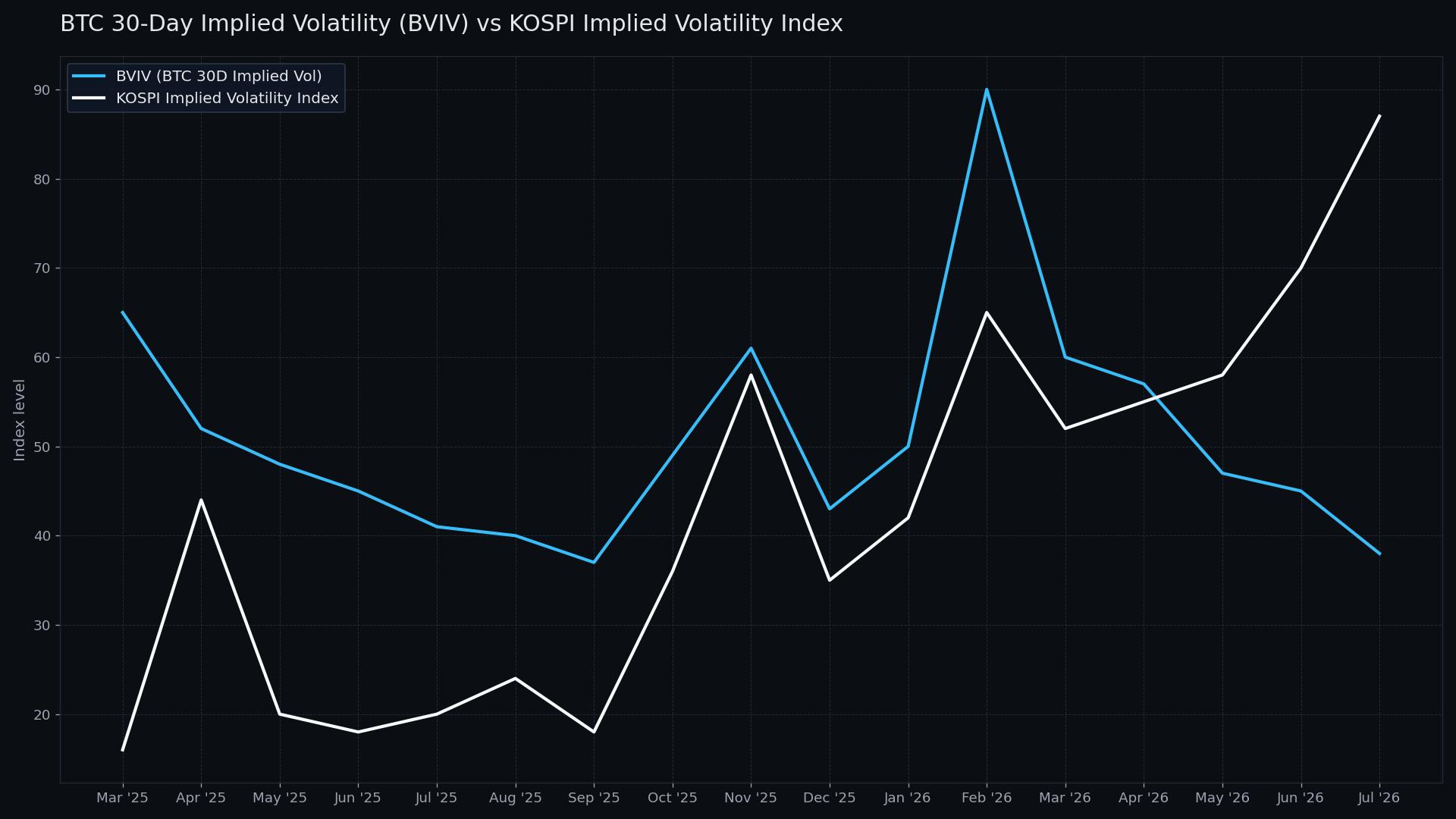
Bitcoin has entered a period of unusual calm, with its price swings now shrinking to levels below those of South Korean equities as enthusiasm for artificial intelligence stocks begins to cool across global markets.
A Quieter Bitcoin
The world's largest cryptocurrency, long known for its stomach-churning volatility, has settled into a comparatively subdued trading pattern. Recent measures of bitcoin's price fluctuations have dropped to a point where the asset is now moving less dramatically than shares listed on South Korea's stock exchanges, a notable shift for a market that traders have historically treated as a benchmark for risk.
The change reflects a broader recalibration of investor appetite. As the fervor surrounding AI-linked equities loses momentum, capital that once chased rapid gains has grown more cautious, dampening the sharp moves that typically define crypto markets.
Bitcoin, once a byword for wild swings, is now steadier than South Korean stocks.
The AI Cooldown
The frenzy that propelled AI stocks to remarkable heights appears to be fading, and that slowdown is rippling through risk assets more broadly. Investors who piled into technology names on the promise of transformative growth are reassessing valuations, leading to reduced trading intensity in speculative corners of the market, including digital assets.
For bitcoin, the reduced volatility can be read in two ways. Some analysts view the calm as a sign of maturation, with the asset increasingly held by long-term investors rather than short-term speculators. Others caution that quieter markets often precede sharper moves, warning that periods of low volatility rarely last.
Key themes shaping the day ahead include:
- Cooling enthusiasm for AI-related equities across global markets
- Bitcoin volatility falling below that of South Korean stocks
- Ongoing debate over whether crypto's calm signals stability or complacency
As traders look to the sessions ahead, the interplay between fading AI momentum and a steadier bitcoin will remain a central storyline, offering clues about how much risk appetite remains in the broader financial system.